
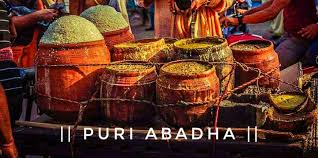
( From Sree Sajjana Toshani, VOL. XXVI )
We find that the holy Scriptures give a definite reply. They forbid us to eat. They tell us that we must do nothing but serve the spiritual. By eating any kind of food which is a material substance only the mind and body are benefited and not the soul. By giving up eating body and mind suffer death which, however, has no jurisdiction over the soul. The body and mind, in as much as they happen to be material, cannot serve the spiritual. They stand in the way and prevent our soul from serving its transcendental Lord. If we allow our body and mind to die of starvation such process also does not benefit the soul because the body and mind is immediately renewed in some other form. The proper use of our body and mind would be their employment in the service of God if that were possible. The shastras say that this is possible if we place our bodies wholly at the disposal of the sadhus or in other words agree to a complete change of our present mode of life. It means a revolutionary change.
We must actually give up all connection with this world already formed by the mind and body and dedicate them entirely for the service of the Lord which is to be learnt at the feet, of the sadhu who possesses the identical kind of life.
If we are sincerely prepared by body, mind and speech to forego all mundane ambitions and to serve, nothing but the Absolute Truth for Its own sake the Lord Himself who is the Absolute Truth is pleased to accept our body and mind offered for such purpose, and by His acceptance makes them” fit for spiritual service. The change is understood dimly at first by the person himself. The sadhus are privileged to notice it but the change is not really intelligible to bound jivas. To the view of sinful persons the activities of the mind and body thus spiritualized appear to be as much material as those of the material body and mind without being really so.
The person who is liberated from the bondage of the world continues to perform the ordinary natural functions of the body and mind apparently in the same way as one who is in the bound state. He also appears to eat and drink, sleep and die like ordinary worldly people. The process of eating of such a person is thus described in the Shastras.
A person whose body and mind have been accepted by the Lord is privileged to approach the Lord and offer Him food and drink. The Lord is pleased to accept the food offered by such a person. By the acceptance of the Lord the food is spiritualized in the same way as the body and mind is spiritualized by their dedication to the Lord. This dedication of all food to the Lord is in the case of such a person truly an act of renunciation of all material food. The food that is accepted by the Lord is spiritualized and is changed into mahaprasad or ‘the great blessing’.
The sadhu accepts the mahaprasad not for the purpose of appeasing hunger or for the acquisition of bodily or mental health and strength or for any other worldly purpose but with the object of being enable thereby to avoid the traps laid for him during his sojourn into this world by sensuous temptations of all kinds including that of eating and obtain by thus honouring the mahaprasad the inclination for the spiritual service of the Lord. Honouring the mahaprasad is thus different from eating although to the uninitiated the two may appear to be identical.
The external form appears to remain the same although the real nature of the activity is radically changed. The result is that whereas by eating the sensuous inclination is strengthened, by honoring the mahaprasad gluttony and its attendant vices are radically cured. Mahaprasad literally means ‘the great favour’. The benefit to the soul that results by honoring the mahaprasad is also open to the bound jiva.
The Lord does not accept food offered by the bound jiva. But if the bound jiva honours mahaprasad his soul is benefited in the way already described.
The food that has been offered by the sadhus to the Lord is categorically different from ordinary food. To take ordinary food is harmful for the soul. By honouring mahaprasad not only is the soul saved from the bad effect of eating but is positively benefited by obtaining the inclination for spiritual service. The shastras, therefore, tell us to give up eating and honour the mahaprasad. ‘If the palate is conquered every other sense is conquered.‘ We can never be freed from the attraction of sensuous temptations until we give up eating altogether and learn to honour the mahaprasad. By honouring the mahaprasad our sensuousness is diminished and ultimately disappears altogether and it is only then that we are enabled to understand the real meaning of the shastras. The sadhu helps the fallen jiva to regain his natural state of freedom from sin and constant service of the Lord by bringing about descent of the transcendental sound in the form of words uttered by his lips and the mahaprasad in the shape of food that is offered by him to the Lord. The sound uttered by the sadhu and the mahaprasad are not things of this world. They are not identical with ordinary sound or ordinary food which are only means for the gratification of our sensuous inclinations and appetite.
The Word of God and mahaprasad cannot be enjoyed or in other words cannot be used for the gratification of the senses, because they are spiritual. Thous who enjoy the kirtan or any spiritual discourse or eat the mahaprasad for appeasing hunger or gratification of the palate are guilty of sacrilegious acts which serve only to prolong the state of sin and ignorance of the greatest possible calamity that can befall the human soul.