
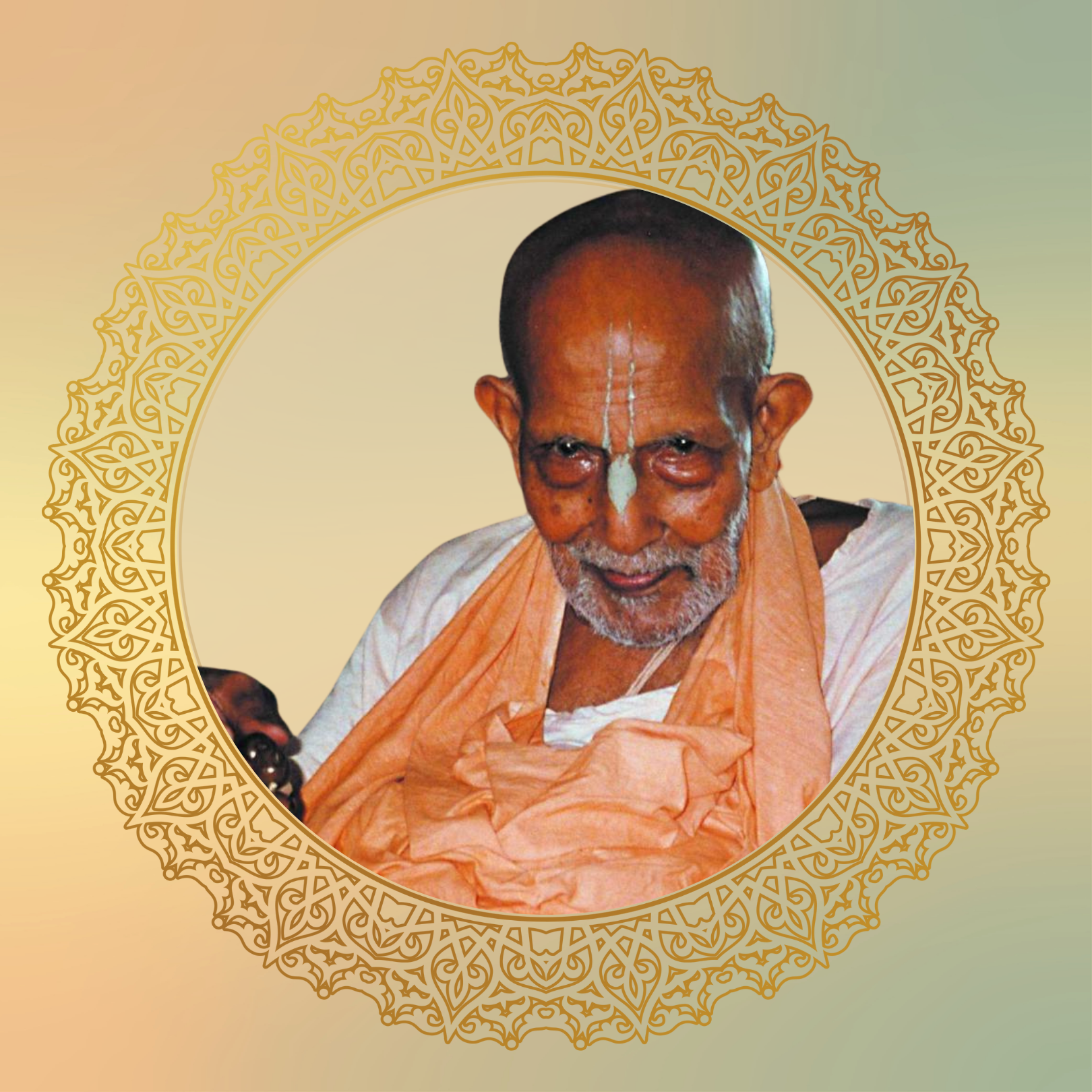
by His Divine Grace Śrīla Bhakti Promode Puri Gosvami Maharaj Mahārāja
Śrīla Bhaktivinoda Thakur has written of the principle of energy. The three modes of material nature are material energy called Mahā–Māyā and are responsible for the material activities like creation and destruction. As long as the living entity is engrossed in sense gratification, till then he comes under this influence of illusory energy. He is able to escape from this abominable material energy only on realization of his innate blissful spiritual identity in relation with transcendence. The question is asked: do the devotees come under any energy at all? The answer is yes. We are part of the material energy but having escaped the realm of material energy, we are now under the safe protection of the spiritual energy.
The opposition sometimes raises this question: “So are you all the worshippers of the female personification of Divine energy (Śākta)?” The answer is “yes,” we are under the shelter of the personification of spiritual energy, Śrīmatī Rādhārāṇī. We are practicing devotion entirely under Her direction. We can compare ourselves in this sense as Śāktas and are therefore non-different from the devotees (Vaiṣṇavas). On the contrary, those not taking shelter of this spiritual potency but only having attraction for the material aspect are not considered devotees but are simply sense enjoyers. In Nārada Pañcarātra, Durgā Devī says: “I am Your loving partner in Your delightful Vṛndāvana pastimes in the form of Your internal pleasure potency.” We perceive from the statement of Durgā Devī that this energy is non-dual. In the transcendental feature, this energy is present as Śrīmatī Rādhikā and in the material form manifests as the material energy. The question is sometimes raised by the opposition that the smārta brāhmaṇas say that the energy of Lord Śiva is the foremost energy (śakti). Why is this?
Śrīla Bhaktivinoda replies: The material nature is composed of the three modes: goodness, passion and ignorance. The brāhmaṇas who are oriented in goodness worship the demigod in that material mode of goodness; those in passion worship the demigod in passion; while those in the mode of ignorance worship “material nature” without knowledge. In actual fact, there is no separate energy called material energy and “Māyā” is just a transformation of the spiritual potency. It is but the shadow energy of the pure spiritual potency of the Lord. The material energy is mainly responsible for the conditioning of the living entity as a form of punishment due to his forgetfulness of his relationship with the Supreme Lord. The living entity, on regaining his lost relationship with the Lord, becomes surcharged with knowledge and bliss. However, if the material energy becomes predominant, it makes the living entities in their forgetfulness refer to this illusory energy (Māyā) as all in all. This explains the worship of material nature (Śākta). Gradually, the bewildered living entity, by long accumulation of pious merit, can be impelled into the position of acquiring divine knowledge (Vaiṣṇava).
The question is raised again: do we sometimes compare Durgā Devī to be a transcendental associate within the precincts of Gokula? The answer given by Śrīla Bhaktivinoda Ṭhākura is: yes. In the spiritual world Durgā Devī is called Yoga–Māyā. She is present as the seed-form in the changes of the spiritual energy. For this reason, she considers herself non-different from the original internal energy of the spiritual world. Yoga–Māyā also can be transformed into material energy, or shadow potency. The material goddess Durgā Devī is the servitor of the spiritual aspect of the same Durgā Devī. The spiritual Durgā Devī plays an important part in Lord Kṛṣṇa’s variegated pastimes as Yoga–Māyā. The Śrīmad–Bhāgavatam (10.29.20) describes how the Lord takes shelter of His own internal potency in the love-sports of the gopīs (yogamāyām upāśritaḥ). The internal energy which nourishes such divine pastimes may look like ignorance but in reality is an essential ingredient in the blossoming of these transcendental sports. The opposition then raises the query: if so, why do the devotees not honor the remnants of Goddess Durgā and other demigods? Why specifically Viṣṇu prasādam?
The answer is: Lord Kṛṣṇa is the sole Supreme Lord and all the demigods are His loyal servants. The leavings of the pure devotees, if partaken, give rise to pure devotion. The remnants of food partaken by the pure devotees, the dust of their lotus feet and the water that washes their feet are highest and most conducive to devotion. The fact is, the impersonalists make a show of worshipping the Deity and offer foodstuffs to them, but the demigods neither appreciate their worship nor accept such foodstuffs, seeing their ignorance by the verdict of scriptures. Ultimately, worship of the demigods is a form of impersonalism. To accept foodstuff from such impersonalists is detrimental to pure devotion and the Goddess of Devotion becomes offended by this action. On the other hand, if a pure devotee offers remnants of foodstuffs of Lord Kṛṣṇa (Kṛṣṇa–prasādam) to the demigods, then they all dance in joy. These remnants of the demigods are then partaken with relish by the devotees (mahā–prasādam). In the yoga scriptures, one should never accept the remnants of any demigod. Here the sole reason for such refusal is that they are able to remain steadfast in their meditations in doing so and not in any way wanting to be offensive to the demigods. Usually, in the practice of devotion, remaining loyal and unalloyed to one’s worshipable Deity is beneficial, while partaking of the remnants of the foodstuffs of other Deities does not contribute to the practice of such devout or loyal worship of one’s beloved Deity. In conclusion, there is no question of offense involved in such practices; to obtain spiritual advancement one has to follow scriptural injunctions verbatim.
Lord Kṛṣṇa has an eternally youthful form and He is the Undivided Absolute Truth. He exhibits Supreme Majesty and uncommonness in His prabhāva and vaibhava forms. Again, His expansions are two-fold: direct expansions (aṁśa) and empowered incarnations (śaktyāveśa). Further, His childhood and youthful pastimes are of different contrast and moods. Even though He performs His pastimes in these six different ways, He remains the sole Absolute Supreme Being unchanged in any way. He is the possessor of directly opposing qualities, characteristics of only the Supreme Power in the spiritual dimension. In Him are present all fame, opulence, knowledge, wealth, renunciation and beauty to the highest degree, unraveling His extraordinary sweetness. His spiritual energy is called the internal energy and all divine spiritual planets have manifested as a result of this energy. The marginal energy gives rise to the innumerable living entities together with the liberated souls. The external material energy helps to create the different material universes.
Śrīla Bhaktivinoda Ṭhākura comments on the prabhāva and vaibhava pastimes: that which has the four-handed form of Lord Hari in existence, knowledge and bliss is the prabhāva form, and when it differs slightly from the actual four-handed form then it is termed vaibhava. Prabhāva signifies predominance of Lordship or mastery and vaibhava denotes mysticism or uncommonness. Prabhāva expansions are of two categories: one type occurs at the end of yugas and is only for a brief period like Mohinī, Haṁsa and Śukla, etc. The other type is not so common, like Dhanvantari, Ṛṣabha, Vyāsadeva, Dattātreya and Kapiladeva. The category of vaibhava expansions include Kūrma, Matsya, Nara–Nārāyaṇa, Varāha, Pṛśnigarbha, Yajña, Vibhu, Hari, Vāmana, Viśvaksena, and all the fourteen Manus in their different manvantaras. That one Supreme Lord, whose energies are beyond this mundane material world, is present in four distinct features as stated by Śrīla Jīva Gosvāmī in his Bhāgavata–Sandarbha. These features are His transcendental and original form, His splendor consisting of the spiritual worlds, the living entity and inert material nature. As an analogy, these four features can be compared to the sun whose different aspects are the form of the sun’s effulgence, the sun globe, the sun’s rays and the reflection of the sun’s rays or its shadows. Similarly, the energies of the Supreme Lord are permeated throughout the universe though He is situated in one place in the spiritual world, as verified by Viṣṇu–Purāṇa.
The Śrutis describe the Supreme Lord whose tiny rays of effulgence are the myriad living entities. Inconceivably, the source of energy can be equal to its diverse energies. These inconceivable energies are threefold in division: the internal, marginal and external potency. It is inconceivable because it can make impossible things happen. The internal spiritual potency has resulted in the transcendental form of the Supreme Lord plus the colossal spiritual worlds like Goloka and Vaikuṇṭha which are manifestations of this energy. The marginal energy consists of the many living entities which are but rays of the Supreme, while the material energy gives rise to the gross and subtle material coverings in this universe, or in turn the shadow potency of the original spiritual energy. These three different energies are described in Viṣṇu–Purāṇa. The material energy is in charge of deluding the minute sparks (jīva–soul) with ignorance which causes them to work with desires for fruits of work. The external material energy is inferior by nature; still it has the power of bewildering the marginally situated superior living entity. The living entity, by origin being transcendental but by identifying with the three modes of material nature, becomes entangled. The effects of the material energy manifest in varying degrees depending on the position of Lord Brahmā down to the non-moving living entities. Thus the original spiritual spark in its ignorance is compelled to suffer the bad effects of this material energy. In Śrīmad–Bhāgavatam (1.7.5), it is explained that the only way to escape the effects of this insurmountable material energy is to practice constant and unmotivated devotional service to the Supreme Lord and not otherwise. In the Bhagavad–Gītā (7.13–14):
tribhir guṇa-mayair bhāvair ebhiḥ sarvam idaṁ jagat
mohitaṁ nābhijānāti mām ebhyaḥ param avyayam
daivī hy eṣā guṇa-mayī mama māyā duratyayā
mām eva ye prapadyante māyām etāṁ taranti te
Śrīla Cakravartīpāda has commented on this third verse “daivī hy eṣā…” that the fallen living entities, due to the desire to extract enjoyment from material nature, have become bewildered by the demigods. Śrī Rāmānujācārya has defined the word daivī as that created for the sport of the demigods or that which is instigated by the demigods. Śrīla Baladeva Vidyābhūṣaṇa has commented that daivī means not of this world, or very extraordinary material energy and for the conditioned souls extremely unsurpassable. Those who surrender to My divine form can cross over this ocean of material existence.
Śrīla Bhaktivinoda Ṭhākura writes: “The Supreme Lord is the storehouse and controller of all energies. All these energies, internal, marginal and material are His maidservants. Simply by His sweet will, He sets into motion all these varieties of energies. The tiny infinitesimal living speck, though possessing in minute measure the qualities of the Supreme Lord, can be deluded by this strong material nature. Mīyate anayā iti māyā — that which can be measured is called Māyā. However, this illusory energy serves as a yardstick to identify the different worlds like the material world, living entities and the spiritual world. Lord Kṛṣṇa is the master of this material energy while the living entity can be subjugated by this material energy.” The Śvetāśvatara–Śruti (4.9–20):
yasman māyī sṛjate viśvam etat tasmin ca anyo māyayā sanniruddhaḥ
māyāṁ tu prakṛtiṁ vidyān māyinaṁ tu maheśvaram
The Lord creates this universe from material elements and the living entity, being influenced by the material energy, becomes entangled by it. The controller of the material nature is the Supreme Lord who pervades the whole cosmic manifestation. The word māyī refers to Lord Kṛṣṇa who is the powerful ruler of all energies. The minute living entity, even on liberation, cannot equal this state, for the Supreme Autocrat creates the entire material world plus the spiritual worlds. His material creation is done through the agency of Lord Brahmā. In Brahma–Sūtra (4.4.19), learned scholars confirm there is an eternal gulf of difference between the living entity and the Lord.
What is the difference between the illusory energy (Māyā) and ignorance (avidyā)? The illusory energy is the energy of Śrī Kṛṣṇa and with this He creates the entire material worlds, and these energies that have been unleashed also serve the purpose of rectifying the fallen entities. Material energy has two functions: (1) avidyā or ignorance, (2) pradhāna or existing material nature in inert condition. Ignorance (avidyā) causes the binding of the living entity while the existing inert material nature evolves as the whole material universe under impulse; while avidyā is the cause of the unwanted desires of the living entities, the inert material nature leads after stimulus to become the cosmic material creation. Material energy too has two categories: (1) knowledge, (2) ignorance.
The knowledge aspect is that which enlightens the living entity to liberation while the ignorant aspect binds the living entity. When the action of the knowledge feature springs into motion, one becomes inclined to the devotional service of the Lord, and when one forgets Śrī Kṛṣṇa, that is the play of ignorance (avidyā). The knowledge of the Absolute Truth is all included under this action of knowledge. At the start, this entails intelligent discrimination and proper effort to cultivate such knowledge.
In Śrīmad–Bhāgavatam, Lord Kapila Deva’s teachings state that the Supreme Lord is the master of the three modes of nature. Śrī Ramanujacharya has written in his Gītā–Bhāṣya of “Māyā,” which is stated as when the actual identity of the Supreme Lord becomes covered in one’s vision and one’s own self becomes enmeshed in the selfish enjoying mentality, this is the work of “Māyā.” Due to this form of delusive energy, the whole world cannot fathom the blissful Supreme Controller. The only solution is complete surrender to the lotus feet of the Lord. Śrīla Rāmānuja explains: “One who is endowed with right thought, compassionate, equal to all beings without distinction and surrendered to the Supreme Lord can hope to cross over this ocean of material existence. One should, by worshipping Him, completely give up ‘Māyā,’ illusory energy.” In the writings of Śrī Baladeva Vidyabhushana we see: The Supreme Lord is very affectionate to His devotees and those who are surrendered to Him will easily be able to cross over material existence. This material existence is compared to a huge ocean which can instantly be reduced to a hoof-print of a cow by such surrender. The word “mām eva” means one who is exclusively surrendered to Śrī Kṛṣṇa and not anyone else, for surrender to other demigods like Lord Śiva does not entail liberation. The Śrutis say that those who know the Supreme Lord in truth can become immortal.
Once the demigods had informed King Mucukunda: “O King, may good fortune be upon you! Whatever you may desire other than complete liberation can be awarded by us, but only Lord Viṣṇu can bestow liberation.” Śrīdhara Svāmī writes: “Pure devotion with surrender is required to overcome the three modes of nature. The word ‘eva’ is used to demonstrate single-pointed devotion to the Supreme Lord. Bereft of this process of devotion, by the influence of this divine material energy, one may have to wander through countless wombs due to ignorance or pray to different demigods and thus end up rotating up and down this universe. All this is the snare of ‘Māyā,’ and the incredible effects of this energy have been described in detail in the Mārkaṇḍeya–Purāṇa.”
The next question is: what is the nature and position of the living entity? Śrīla Bhaktivinoda Thakur quotes from the Gītā:
bhumir āpo ’nalo vāyuḥ khaṁ mano buddhir eva ca
ahaṅkāra itīyaṁ me bhinnā prakṛtir aṣṭadhā
aparāyam itas tv anyāṁ prakṛtiṁ viddhi me parām
jīva-bhūtāṁ mahā-bāho yayedaṁ dhāryate jagat
Meaning: Earth, water, fire, ether, mind, intelligence and false ego—these eight are the components of My inferior material nature. Above this material nature is My superior nature which is composed of living entities.
The Gītā confirms that the living entity is superior to material nature but inferior to the transcendental spiritual potency. This is described by Śrīla Krishnadasa Kaviraja in Caitanya–Caritāmṛta:
jīvera svarūpa haya kṛṣṇera nitya-dāsa
kṛṣṇera taṭasthā–śakti bhedābheda–prakāśa
The living entity is the eternal servant of the Supreme Lord and His marginal potency. He is equal in quality, not in quantity, and is a ray of the Supreme Lord. Just as the sun radiates light, similarly the living entities emanate from the Supreme. In Viṣṇu–Purāṇa the superior (parā), marginal (kṣetra), and material (avidyā) energies are discussed.
kṛṣṇa bhuli’ sei jīva anādi–bahirmukha
ataeva māyā tāre deya saṁsāra–duḥkha
The living entity has been covered by illusion for a long time and has been suffering countless miseries, but by receiving the mercy of the pure devotees he takes to devotional service of the Lord which frees him from the effects of illusory energy. Seeing the bewilderment of the living entity, the compassionate Lord reveals the scriptures. Consequently, by the utility of scripture, with the help of the external spiritual master and internal caitya–guru (the Supreme Lord in the heart), he uncovers his real spiritual identity. This according to stages is the process of knowledge of Śrī Kṛṣṇa (sambandha), the devotional practice (abhidheya), and finally pure devotion (prayojana).
It has already been mentioned that the Lord is the controller of material energy while the living entity can be subjugated by material energy. The Śvetāśvatara–Upaniṣad mentions:
bālāgra–śata–bhāgasya śatadhā kalpitasya ca
bhāgo jīvaḥ sa vijñeyaḥ sa cānantyāya kalpate
The living entity is compared to one ten-thousandth of the tip of a hair. Nevertheless, that same living entity can be qualified for liberation. The Vedānta–Sūtra (2.3.18) describes how the living entity, being very tiny, can be overcome by tendencies toward sinful or pious activities. Muṇḍaka–Śruti (3.1.9) describes: eṣo ’ṇur ātmā cetasā veditavyaḥ—the minute living soul must attain purified consciousness.
Śrīmad–Bhāgavatam (1.7.4–5) states:
bhakti–yogena manasi samyak praṇihite ’male
apaśyat puruṣaṁ pūrṇaṁ māyāṁ ca tad–apāśrayam
yayā sammohito jīva ātmānaṁ tri–guṇātmakam
paro ’pi manute ’narthaṁ tat–kṛtaṁ cābhipadyate
Śrīla Vyāsadeva, by devotional service, saw the Supreme Lord Śrī Kṛṣṇa and also perceived the material energy situated behind Him. This material energy is the shadow of His internal potency and functions in two ways: the āvaraṇātmikā–śakti (covering potency), which hides the living entity’s original identity, and the vikṣepātmikā–śakti (throwing potency), which bewilders mind and intelligence. Thus the living entity becomes bound in the three modes and develops false ego.
From Bṛhad–Āraṇyaka–Śruti (2.1.20):
yathāgneḥ kṣudrā visphuliṅgā vyuccaranti
evam evāsmād ātmanaḥ sarvāṇi bhūtāni vyuccaranti
Just as sparks emanate from a blazing fire, similarly countless living entities emanate from the Supreme Lord. The living entity stands in the taṭasthā (marginal) position between material and spiritual worlds. By proper cultivation he becomes spiritualized; by ignorance he falls into material existence. Without association of pure devotees, he cannot be freed.
In Caitanya–Caritāmṛta:
advaya–jñāna–tattva kṛṣṇa svayaṁ bhagavān
svarūpa–śaktirūpa tāṅra haya avasthāna
Lord Kṛṣṇa is the non-dual Absolute Truth. His energies are equal to Him in quality but not independent. The insurmountable material energy must be overcome, not worshipped.
Śrīmad–Bhāgavatam (2.5.13):
vilajjamānayā yasya sthātum īkṣā–pathe ’muyā
vimohitā vikatthante mamāham iti durdhiyaḥ
The material energy, ashamed before the Lord, bewilders the living entities into thinking “me” and “mine.”
In the nectarean pastimes of Śrī Hari, contrasting mellows nourish His līlā. One should not reject recommended practices in the name of higher moods. Scriptures like Bhagavad–Gītā give proper direction for overcoming material nature. Without saintly association, their purports cannot be understood.
In Bhagavad–Gītā, the Lord concludes with:
man–manā bhava mad–bhakto…
sarva–dharmān parityajya mām ekaṁ śaraṇaṁ vraja…
These verses reveal pure devotional service as the supreme goal.
Śrīmān Mahāprabhu instructed Śrīla Svarūpa Dāmodara:
yāhā bhāgavata paḍe vaiṣṇavera sthāne
ekānta āśraya kara caitanya–caraṇe
caitanya–bhakta–gaṇera nitya kara saṅga
tabe ta jāniyā siddhānta–samudra–taraṅga
One must study Śrīmad–Bhāgavatam in association of pure Vaiṣṇavas to cross the ocean of conflicting conclusions. In this way one becomes free from Mahā–Māyā and takes shelter of Śrī Kṛṣṇa. Finally, shelter of Śrīla Gurudeva is essential to receive the mercy of Yoga–Māyā and be freed from the effects of Mahā–Māyā.