
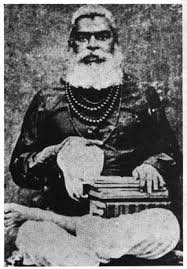
Edited by Srila Shyam Das Baba Maharaj
Without kṛpā (mercy) of Parameswara no other way to cross over this impassible material ocean. Though superior to inert object (matter) still the jīvas are very weak and subjugated. Only Supreme Lord is the ultimate controller and caretaker. The jīva is anu Caitanya, so as a result is under the control of Parama Caitanya and is His servant. Parama Caitanya Bhagavan is the shelter of the jīva. This material world is made up of māyā. The presence of the jīva in this material world is only like a prisoner to suffer punishment for punishable criminal activity. The Bhagavat aversive mood of jīva is the cause of this māyā trap. Without Bhagavat seva mood no other way out for jīva to get rid of māyā. Bhagavat aversive jīva is but –māyā baddha. The jīva, who has a submissive mood towards Bhagavan is mukta.
Bonded souls, by the help of their sādhana and if they get Bhagavat kṛpā, then they can cut the strong bondage rope of māyā. Those maharṣis after long deliberation have identified/specified three types of sādhanas—those are karma, jñāna and bhakti.
Varṇāśrama-dharma, jñāna, tapasyā, dāna-vrata, etc. all different kind of karma aṅga are stated in the śāstras. All those karmas having different fruits—already quoted in the śāstras. If those fruits are considered carefully—then this can be seen that those are the important fruits: Enjoyment in heaven, worldly enjoyment, special efficiency, to get remedy from disease and to get scope of higher rankly position. The scope of higher rankly position (elevated activities)—if this fruit is kept separately, then all other fruits are seen to be material fruits indeed. Enjoyment in heaven, worldly enjoyment, opulence etc. such capacities—which all can be attained by karma, all those are unstable. By the magic spell of cyclic order of time, all those are going to be destroyed. By those fruits (derived from those fruitive activities) the question of cutting māyā bondage is far away, on the contrary those can increasing the desire more and more tightly in course of time. If higher elevated rankly karma is going to be avoided, then the fruit relating to that elevated karma–the scope for that can also become useless; as per example the following śloka from Śrīmad Bhāgavatam—
dharmaḥ svanuṣṭhitaḥ puṁsāṁ
viṣvaksena-kathāsu yaḥ
notpādayed yādi ratiṁ
śrama eva hi kevalam (ŚB 1.2.8)
The occupational activities a man performs according to his own rank and qualification are really so much laborious but useless if not giving inspiration and attraction for the message of the Supreme Divinity, then what use of it.
This kind of varṇāśrama-dharma, which giving the fundamental significance that, – according to nature of man this can easily allow their material interest and material body related specified categorical and divisional procedure to maintain their material interest and bodily performance very easily or smoothly, then they can get enough scope to discuss and think about hari-katha.
If somebody even after following varṇāśrama-dharma cannot develop any attraction or affinity for hari-katha, then all his effort or energy spent for the following of functional dharma— all can go in vain. It is sure that by the help of karma it is quite impossible to cross over this material ocean, this whole subject matter I wanted to describe in short.
The practice of jñāna is described as a way to attain a higher order of life. The result of jñāna is purification of atma. The atma is beyond material conception, and because the jīva is forgetting this fact- now he is traveling in the way of karma marg. During the practice of jñāna, the jīva can realize that— “I am not matter but cit-vastu.” That type of jñāna is usually known as “naiṣkarmya”; since the eternal property of cit-vastu is to get the taste of cit-ananda, so this way of the jīva cannot get the chance to start feeling that way. At this stage a man is ātmārāmā. But when the taste of cit-ananda—the cit- function starts, then “naiṣkarmya” cannot stay. That is why Nāradji has said that—
naiṣkarmyam apy acyuta-bhāva-varjitaṁ
na śobhate jñānam alaṁ nirañjanam
kutaḥ punaḥ śaśvad abhadram īśvare
na cārpitaṁ karma yad apy akāraṇam (ŚB 1.5.12)
Knowledge of self-realization, even though free from all material affinities, does not look good if devoid of the conception of the achyuta-bhāva. What, then, is the use of fruitive activities, which are naturally painful from the very beginning and transient by nature if they are not utilized for the devotional service of the Lord?
Till then that type of naiṣkarmya—nirañjana-jñāna is not at all good without acutya-bhāva. Now the question can come that- Then what will be the exact judgment. So in Bhāgavatam we can get the answer–
sūta uvāca–
ātmārāmāś ca munayo
nirgranthā apy urukrame
kurvanty ahaitukīṁ bhaktim
ittham-bhūta-guṇo hariḥ (ŚB 1.7.10)
Sūta Gosvāmī has said: All different varieties of ātmārāmāś [those who take pleasure of the atma, or the spirit itself], especially those who are established in the path of self-realization, though they are free from all kinds of material bondage, can feel attraction to render unalloyed devotional service unto the Lotus Feet of the Personality of Godhead. This means that the Lord possesses such unique transcendental qualities and for that reason can attract everyone, even those liberated souls.
There is such an excellent and unique quality in the Supreme Lord, that can attract those ātmārāmāś towards Him to engage them in devotional activities. So, when karma going to give a good scope to be engaged in bhakti-sādhana and jñāna going to help avoid the svarūpa of naiṣkarmya to get engaged in bhakti-sādhana, then that karma or jñāna can be called as sādhan–aṅga. But their respective individual sādhana track not approved in śāstra. That is why bhakti itself is called sādhana. Karma and jñāna both under the shelter of bhakti sometimes become sadhan-aṅga; but bhakti is naturally by svarūpa-sadhan-rūpa; as for example from eleventh canto Śrīmad Bhāgavatam we can find the following śloka –
na sādhayati māṁ yogo
na sāṅkhyaṁ dharma uddhava
na svādhyāyas tapas tyāgo
yathā bhaktir mamorjitā (ŚB 11.14.20)
My dear Uddhava, the unalloyed devotional service rendered for Me by My devotees can make Me under their control. I cannot be thus become controlled by those who are engaged in mystic yoga, Sāṅkhya philosophy, pious activities, Vedic study, austerity, or renunciation.
Oh Uddhava! Karma-yoga, sāṅkhya-yoga, varṇāśrama-dharma, Veda path, tapasyā or vairāgya etc. nothing can satisfy me; but only strong bhakti (pure bhakti) can satisfy me.
For the complete satisfaction of Bhagavan nothing is effective except bhakti-yoga. Sadhan-bhakti like śravaṇa–kīrtana etc. nine folds of bhakti. Out of nine folds of bhakti-śravaṇa-kīrtana–smaraṇa, these are vital sādhan-aṅgas. The nama–rūpa-guṇa-līlā etc. these four parts about which śravaṇa-kīrtana and smaraṇa can be possible. Out of those– nama is the prime object and is like the seed of all. So Śrī harināma is the root of all upāsanā-aṅga (bhajana). That is why it is stated in the śāstras —
harer nāma harer nāma
harer nāmaiva kevalam
kalau nāsty eva nāsty eva
nāsty eva gatir anyathā (Brihad Nāradiya-purāṇa)
“ ‘In this age of controversy and hypocrisy, the only means of deliverance is the chanting of the holy names of the Lord. There is no other way. There is no other way. There is no other way.’ ”
In Kali-kal there is no other way open for the jīva, except harināma. By the word ‘Kali’ it is understood that for all the time Śrī harināma is effective – except harināma there is no other way. Specially all other mantras etc. are being out of range, so harināma is the only support for us, since harināma is the most powerful means of bhajana. What an excellent thing harināma is – it is stated in Padma-purāṇa –
nāma cintāmaṇiḥ kṛṣṇaś
caitanya-rasa-vigrahaḥ
pūrṇaḥ śuddho nitya-mukto
‘bhinnatvān nāma-nāminoḥ C.c./madhya/17/133)
” ‘The Holy Name of Kṛṣṇa is transcendentally blissful. It bestows all spiritual benedictions, for it is Kṛṣṇa Himself, the reservoir of all pleasure. Kṛṣṇa’s name is complete, and it is the form of all transcendental mellows. It is not a material name under any condition, and it is no less powerful than Kṛṣṇa Himself. Since Kṛṣṇa’s name is not contaminated by material qualities, there is no question of being involved with māyā. Kṛṣṇa’s name is always mukta and spiritual; it is never influenced by the laws of material nature. This is because the name of Kṛṣṇa and Kṛṣṇa Himself both are identical.’ In the explanation of this śloka Śrīla Jīva Gosvami has statet that–Ekaṁ eva saccidānanda rasa ādi rūpam tat yam didhah ābhirbhūtaṁ iti artha (Bhakti-Sandarbha)
Śrī Kṛṣṇa Tattva is advaya saccidānanda svarūpa. Two types of advents of this tattva is possible, one is Śrī Kṛṣṇa Himself which is known as ‘Śrī Kṛṣṇa Vigrahaḥ’ and the other by name ‘Kṛṣṇa’. The original (or fundamental) tattva is this, that Śrī Kṛṣṇa is almighty (all powerful), He is the Śaktimān Puruṣa . All His different kind of manifestations are nothing, but possible expression of His śakti. It is His śakti, which can manifest the puruṣa in front of others. By the power spell of darśana-śakti-kṛṣṇa-rūpa can get manifested, and by the influence of vocal power kṛṣṇa-nama can be known. So kṛṣṇa–nama is equal to cintāmaṇiḥ-svarūpa, kṛṣṇa-svarūpa and at the same time caitanya-rasa-vigrahaḥ-svarūpa. Śrī Nama is always the complete svarūpa. I mean, it is not dependent upon any case ending like ‘Kṛṣṇaye’ ‘Nārāyaṇaye’ etc. to build up a mantra. Instant by speaking the name of Kṛṣṇa, kṛṣṇa-rasa appears in cit-tattva immediately. Nama is always viśuddha, I mean not like a material object, which can be derived from the material world. Nama is only caitanya-rasa, nama is always mukta, so, nittya mukta; never has any material background. Only those who already have tasted nama-rasa, they can realize such explanation. Those who are going to attribute material conception in nama, they are unable to get the taste of caitanya-rasa of Śrī Nama, they cannot get satisfaction with such explanation. If someone claim that— “Always we utter that kind of nama, those are based on material alphabet; so, in this case harināma should be considered as having material quality, so surely this nama cannot be spoken as nittya mukta”. So, to cut off such logic or argument, Śrī Rūpa Gosvamipad has written in bhakti Rasamṛta sindhu the following śloka –
ataḥ śrī-kṛṣṇa-nāmādi
na bhaved grāhyam indriyaiḥ
sevonmukhe hi jihvādau
svayam eva sphuraty adaḥ (C.c./madhya/17/136)
” ‘Therefore, material senses cannot appreciate Kṛṣṇa’s Holy Name or form or qualities or pastimes etc. When a conditioned soul is awakened to Kṛṣṇa consciousness and start serving by using his tongue (or by other sense organs) then can chant the Lord’s Holy Name and can get the taste of harināma.
Those material objects are tangible or sensible. But kṛṣṇa-nama etc. is transcendental (aprākṛta), that harināma is never perceptible by the help of sense organs. But still when Śrī harināma can get manifested or can appear on our tongues, this is only the aprākṛta-ananda of atma, the manifestation of Śrī nama is possible only in those favorable sense organs. Bhakta when utter Kṛṣṇa nama by the help of aprākṛta tongue of atma, then by that pronunciation—parama-tattva can get manifested on the material tongue to dance on. By ānanda-hāsya (laughing), by sneha-krandane (crying), by prīti-nṛtya (dancing) possible to appear in material rasa to get extended up to sense organs, similarly in aprākṛta- rasa-kṛṣṇa nama can get extended up to tongue to manifest rasa. On the material tongue kṛṣṇa-nama cannot take birth. At the time of sādhana what is called practice of nama, that is not actual nama, but can be called as nāmābhāsa. In course of gradual promotion of nāmābhāsa sometime one can develop ruci in aprākṛta nama. In course of a discussion of Valmiki Muni and Ajāmila – about their life and character – this can be known easily. Due to aparādha, the jīva cannot develop ruci in harināma. They who can taking harināma by avoiding aparādha can realize the manifestation of ‘aprākṛta-harināma inside their heart as chinmoye-rasa-vigrahaḥ. With the manifestation of aprākṛta–nama inside the heart, a feeling of aprākṛta enjoyment can appear inside the heart, to show tears rolling down from the eyes and sāttvika-vikāra (reaction) also appears immediately. So, it is spoken in Śrīmad Bhāgavatam that—
tad aśma-sāraṁ hṛdayaṁ batedaṁ
yad gṛhyamāṇair hari-nāma-dheyaiḥ
na vikriyetātha yadā vikāro
netre jalaṁ gātra-ruheṣu harṣaḥ (ŚB 2.3.24)
Certainly, that heart is very hard like stone which despite taking Holy Nama of the Lord not going to show any reaction of ecstatic feeling like tears or horripilation etc.
The jīva, when he is taking harināma, then surely he can feel a reaction moved by sattvika-vikara, tears can roll down and can feel some horripilation. He- who taking Kṛṣṇa nama without such reaction having been felt, then his heart surely has become very hard like stone due to aparādha.
To take harināma without any aparādha is the duty of a sadhaka. So, to avoid aparādha one should know– how many kinds of aparādhas are there. About harināma ten kinds of aparādhas are found in śāstra viz.
1., sādhu ninda.
2., To think Śiva like demigods to be a separate Bhagavan from the Supreme Lord.
3., guru-avagya –ignoring the order of guru.
4., śāstra-ninda (criticizing śāstra).
5., To think the glory of harināma as only appreciation nothing else.
6., To imagine some artificial meaning of harināma.
7., To do sinful activities on the strength of harināma.
8., To think that doing harināma is same as doing other ritualistic activities (auspicious activities).
9., To advice harināma to such a man who has no śraddhā (faith) at all.
10., To disbelieve the glory of harināma even after hearing the unique glory of harināma.
To dishonor those sādhu-baktas and to criticize those mahājanas, who are having sādhu character, can invite aparādha in harināma. So, he who likes to take shelter of harināma, should avoid the tendency of insulting Vaiṣṇavas. If at all going to develop any doubt about the activities of Vaiṣṇavas, then before criticizing, instant one should search out the significance relating to those activities done by them. So, it is very important to show respect to those sādhus.
To think Śiva etc. demigods to be separate from the Supreme Lord can be taken as harināma aparādha. Bhagavan Viṣṇu Himself is one and unique. Śiva etc. demigods they have no separate existence from Bhagavan Viṣṇu. If Śiva etc. Demigods can be respected as guṇa–avatāra of Bhagavan and as Bhagavat Bhakta, then a separate idea cannot stand. Those who are going to think Mahādeva as a separate God to worship Śiva or Viṣṇu separately, then they are going to ignore Mahādeva and his Godliness. In this way they are going to invite aparādha, both unto the Lotus Feet of Viṣṇu and Śiva. Those who are going to take shelter of harināma they should avoid such kind of separate conception totally.
To ignore Gurudeva is a nama-aparādha. By the grace of whom Bhagavat-tattva-vigyan can be realized, he is Bhagavan in the form of the acarya. It is the duty to develop strong faith in harināma by the help of strong guru-bhakti.
To criticize sat śāstras must be avoided. Anādi-veda-śāstra and all smṛti-śāstras always on behalf of Bhagavan going to show us so many authentic documents by the help of which bhagavat-dharma can be realized, so if someone criticize those śāstras then harināma-aparādha must develop. In Vedadi-śāstras everywhere the glory of harināma can be found as for example the following śloka we can quote from Harivamsa—vede rāmāyaṇe caiva purāṇe bhārate tathā ādāv ante ca madhye ca hariḥ sarvatra gīyate. If someone criticize such sat-śāstras, then how it is possible for him to develop interest in harināma? Some of those who think that the glorification of harināma found in Vedadi śāstras are only but appreciation. Those who have such dirty conception, they are nama- apparadhi, they can never develop any result in taking harināma. Like in all other karma-khaṇḍa some lucrative offers (fruits) are spoken or described in śāstras to help people develop interest in those karma-khaṇḍa activities, if the glorification of harināma is treated like that, then they are really unlucky to think that way (wrong way). Those who are really lucky- they never believe such dirty over-estimation. We can find the following śloka from Śrīmad Bhāgavatam—
etan nirvidyamānānām
icchatām akuto-bhayam
yogināṁ nṛpa nirṇītaṁ
harer nāmānukīrtanam (ŚB 2.1.11)
O King! constant chanting of the Holy Name of the Lord is the final conclusion by those great sages for those who want to become fearless in the way of developing detachment mood in this material world.
Those who are less interested to get material enjoyment or those who are fed up with material enjoyment and want to become fearless, for such yogis harināma-kīrtana is the only prescribed duty written in śāstra, those who can develop such faith, they can get result in the way of doing harināma.
Without realizing the basic difference between nāmābhāsa and nama, some are thinking that nama is nothing but an assembly of alphabets, so they feel that they can get results even if harināma can be taken without any faith. They are giving the example of Ajāmila and the following śloka —
sāṅketyaṁ pārihāsyaṁ vā
stobhaṁ helanam eva vā
vaikuṇṭha-nāma-grahaṇam
aśeṣāgha-haraṁ viduḥ (ŚB 6.2.14)
One who chants the Holy Name of the Lord, immediately can get free from the reactions of unlimited sins, even if he speaks nama indirectly (Bhagavan nama) or jokingly or to indicate something else in the name of Bhagavan nama or in course of a song sung by somebody to add nama as something extra of his own, or to do nama even with negligence.
Previously it is already told that nama is Caitanya rasa-vigrahaḥ, and beyond the range of sensual perception. So, in that case if not taken shelter of nama- rasa by avoiding nama aparādha– then one cannot get result. Those who are devoid of śraddhā (faith) the result of their uttering Śrī Nama can ultimately drive them towards taking nama with faith. So, they are completely aversive and offender unto the Lotus Feet of nama. Those who are going to think the glory of harināma as superfluous, with such material conception that this is just an assembly of alphabets and going to explain that taking harināma is a part of karma-khaṇḍa, they are also going to commit aparādha unto the Lotus Feet of Harināma Prabhu. Those Vaiṣṇavas must avoid nama-aparādhas very carefully.
After taking shelter of Harināma Prabhu, if some are thinking that we have received one powerful medicine of all sinful activities, this can be treated as dangerous motive. With such believe they like to go on cheating, speaking lie, indulge in loose activities etc., at the same time they like to go on doing harināma to find excuse of their sinful activities. They are all nama–aparādhī. He, who really is taking shelter of Nama Prabhu, after getting the taste of cid-rasa can never grow any interest for those temporary material enjoyment. It is not possible for him to commit sinful activities anymore. To take harināma even after committing sinful activities again and again is nothing but kapat mood. This aparādha is really the heaviest of all, any how this should be avoided.
Some are thinking that – “yajña ādi karma, dana ādi dharma, tīrtha ādi yatra, all such efforts are auspicious, similarly harināma is also like that. Their such wrong conception can prove that they are namaaparādhī nama is always full of cid-rasa-svarūpa. All other sat karmas are material; those are completely different from Śrī Nama. Those who are thinking that such auspicious activities are all the same with harināma, they surely have not realized the actual nama-rasa. Like the gulf difference between diamond and glass piece, harināma and other auspicious activities can prove that kind of objective difference in between them.
He, who is advising harināma to a man, who has no faith, he is also a nama-aparādhī. Pearls if given to a pig can prove no meaning, only this can become insulting for the pearl, similarly giving advice of nama to those who are not having proper faith—is really very very offensive. It is the duty to do accordingly, so that other jīvas can develop faith in harināma. If faith is already developed, then nama advice can be given, not before that. Those who are with a false ego of guru-ship—going to advice harināma to an impure candidate, they are falling due to nama-aparādha. Even after hearing the glories of harināma, those who are not going to develop absolute faith in harināma and not avoid other sādhana procedures to avoid the shelter of karma–jñāna etc. they are also nama-aparādhī
All such ten kinds of nama-parādhas, if cannot be avoided, then harināma cannot appear, if somehow this can be avoided– then immediately nāmābhāsa can appear. By the help of nāmābhāsa all sins can go clear, after the cleaning of sins–śraddhā can appear, and if śraddhā appears, then nama-rasa can appear inside heart. That is why the glorification of nāmābhāsa are found in the śāstras.
The rescuer (deliverer) of Kali stricken jīvas—Śrīman Mahaprabhu after watching all different kinds of sufferings in them, out of causeless mercy He has given the following advice—
tṛṇād api sunīcena
taror api sahiṣṇunā
amāninā mānadena
kīrtanīyaḥ sadā hariḥ (Śikṣāṣṭaka verse 3)
“One who is humbler than a blade of grass, more forbearing than a tree and who can give due honor to others without desiring honor for himself is qualified to chant the Holy Name of Kṛṣṇa continuously.”
By feeling Himself even lower (humbler) then the blade of grass and, being more forbearing than a tree, and being free from false ego and by giving honor to others without expecting personal honor, a jīva finally can attain the Right for doing harināma-kīrtana. The inner meaning of this advice is to attend the perfect stage for doing harināma–kīrtana by avoiding all different kinds of aparādhas. He, who deem himself as the lowest creature in this creation—he surely is not going to criticize any sādhu, surely cannot ignore Gurudeva, cannot criticize sat śāstras, can feel the glories of harināma as appropriate, and can never make any unusual comment about harināma, I mean can never make any unusual comment about the word “Hari” by thinking, this to be impersonal Brahma in the background of dry logical interpretation, can never do any sinful activity on the strength of harināma, can never think taking harināma same as all other kind of auspicious karmas, also can never create a ridiculous situation by giving harināma to such a man who has no faith in harināma, and he himself can never express any disbelieve in harināma. He naturally can avoid ten different kinds of nama aparādhas. If someone going to joke with him or going to do some harm to him, still he never going to feel aversive to render absolute benefit for him. He never deems himself as the doer or enjoyer in course of his doing all different kind of activities in this material world. He always deems himself as a servant of this world to get engaged in the vrata of seva of this world.
On the tongue of such a qualified candidate — harināma can appear, then that pure nama can appear inside the heart just like the flash of the lightening fire to erase all the darkness of ignorance inside the heart of jīvas to help cut māyā totally and to establish completely the peaceful situation of the heart.
So—Oh great souls! You can try to do harināma by avoiding all different kinds of aparādhas because except harināma no other support is there for the jīvas. Accept harināma no other shelter is there for the jīvas. This is a impassible material ocean and the jīvas are in a floating condition and can try to take shelter of jñāna and karma ādi. But it can become a futile effort on their part to cross over this vast material ocean simply by the help of a straw—which is surely useless. Try to cross over this impassible vast material ocean by the support of this great ship of harināma.
Śrī Kṛṣṇarpanamastum
Jaya Jaya harināma– Based on the second verse of Śrī Kṛṣṇa-nāmāṣṭakam
(1)
jaya jaya harināma, cidānandāmṛta-dhām,
para-tattva akṣara-ākār
nija-jane kṛpā kori’, nāma-rūpe avatari’,
jīve doyā korile apār
All glories, all glories to harināmaa, the abode of the nectar of divine knowledge and bliss and the Supreme Truth in the form of syllables. Out of mercy for His devotees, He descended in the form of His names and thus showed vast compassion to all the living beings.
(2)
jaya `hari’, `kṛṣṇa’, `rām’, jaga-jana-suviśrām,
sarva-jana-mānasa-rañjana
muni-vṛnda nirantar, je nāmera samādar,
kori’ gāy bhoriyā vadana
All glories to the holy names of Hari and Kṛṣṇa, which are the sublime shelter for the living entities of the world, and which delight the minds of all. Hosts of great sages, who have true honor for these names, eternally sing them, filling their mouths [with nāma].
(3)
ohe kṛṣṇa-nāmākṣar, tumi sarva-śakti-dhar,
jīvera kalyāna-vitaraṇe
tomā vinā bhāva-sindhu, uddhārite nāhi bandhu,
āsiyācho jīva-uddhāraṇe
O syllables of Kṛṣṇa’s name, You possess all powers to bestow auspiciousness upon the living beings. Without You, there is no other friend to deliver us from the ocean of material existence. Indeed, You have come to deliver all jīvas.
(4)
āche tāpa jīve jata, tumi saba koro hata,
helāya tomāre eka-bār
ḍāke jādi kono jan, ho’ye dīn akiñcan,
nāhi dekhi’ anya pratikār
You dispel whatever misery afflicts the jīva, if he, feeling himself poor and insignificant and seeing no other remedy, calls Your name one time, even out of impulse.
(5)
tava svalpa-sphūrti pāy, ugra-tāpa dūre jāy,
lińga-bhańga hoy anāyāse
bhakativinoda koy, jaya harināmaa jay,
paḍe’ thāki tuwā pada-āśe
If one obtains even a momentary vision of You, then all sorts of terrible miseries disappear, and one’s gross and subtle bodies are easily destroyed. Bhaktivinoda says, “All glories, all glories to the holy names of Śrī Hari! I prostrate myself in hopes of attaining Your lotus feet.”
Nārada Muni bājāya vīṇā — Based on the eighth verse of Śrī Kṛṣṇa-nāmāṣṭakam
(1)
nārada muni, bājāy vīṇā
‘rādhikā-ramaṇa’-nāme
nāma amani, udita haya,
bhakata-gītā-sāme
The great sage Nārada plays his vīṇā in accompaniment to [the chanting of] the names of Śrī Rādhikā-Ramaṇa, and the Holy Name immediately appears amidst the devotees’ singing.
(2)
amiya-dhārā, bariṣe ghana,
śravaṇa-yugale giyā
bhakata jana, saghane nāce,
bhoriyā āpana hiyā
When the current of nectar [of the Holy Names of the Lord] streams profusely and enters both ears, the devotees dance continuously, their heart filling with joy.
(3)
mādhurī-pūra, āsava paśi’,
mātāya jagata-jane
keho vā kānde, keho vā nāce,
keho māte mane mane
The stream of sweet nectar maddens the people of the universe. Some weep, some dance, and others become fully intoxicated within their minds.
(4)
pañca-vadana, nārade dhori’,
premera saghana rol
kamalāsana, nāciyā bole,
‘bolo bolo hari bolo’
The five-headed Lord Śiva, embracing Nārada, roars repeatedly out of prema, while he who sits upon a lotus flower, Lord Brahmā, dances enthusiastically and calls out, “Haribol! Haribol!”
(5)
sahasrānana, parama-sukhe,
‘hari hari’ boli’ gāya
nāma-prabhāve, mātilo viśva,
nāma-rasa sabe pāya
Thousand-headed Lord Śeṣa, feeling supreme happiness, sings, “Hari! Hari!” By the influence of the holy name, the entire universe becomes maddened, and everyone tastes the rasa of the holy name.
(6)
śrī-kṛṣṇa-nāma, rasane sphuri’,
pūrā’lo āmār āśa
śrī-rūpa-pade, yācaye ihā,
bhakativinoda-dāsa
This servant, Bhaktivinoda, prays at the lotus feet of Śrīla Rūpa Gosvāmī, “May the holy names of Śrī Kṛṣṇa fulfill all my desires by manifesting upon my tongue.”