
All glories to Śrī Śrī Guru & Gauranga
acinoti yah śāstrartham acare sthapayaty api
svayaṁ acarate yasmād ācārya tena kirttitah
(Vayu Purana)
An ācārya is one who fully understands the conclusions of the revealed scriptures and whose behaviour reflects his deep realization. He is a living example because he teaches the meaning of the scriptures both by word and by deed.
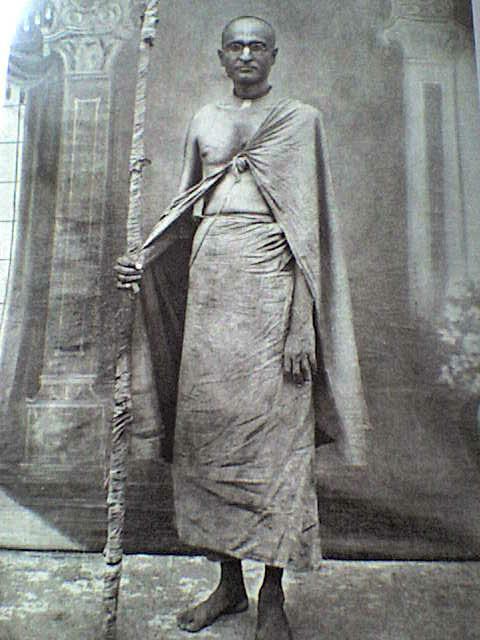
Śrīla Bhakti Siddhānta Sarasvatī Ṭhākura Prabhupāda told that it is not possible to select an ācārya through election. Perhaps for this reason Jagat Guru Śrīla Prabhupāda did not feel it necessary to elect an ācārya.
At least 15 years ago, a Gauḍīya Vaiṣṇava ācārya, whose name I don’t like to speak, was old enough to leave this material world. He was an international preacher. Some of his followers put questions to him about who would be the next ācārya. He was bound to reply to their question, “I find nobody who is just fit for this post, so whom to elect I cannot understand.” Those followers then expressed their deep anxiety on this issue. They claimed that they would be unable to maintain the mission properly. They even suggested that in the future the mission would collapse. The challenge obligated the powerful ācārya to speak with strength and confidence. He asserted that his society had been built up by the desire of Śrīman Mahāprabhu. The ācārya added that if Lord Caitanya Mahāprabhu desired to let the society collapse then he himself would feel no personal responsibility in the matter. He remained steady in declining to elect a fanciful (unqualified) ācārya from among his disciples.
We must understand the difference between serving Vaiṣṇavas, and taking service from Vaiṣṇavas
We can serve Vaiṣṇavas, but if our motive is negative than what to speak more even, we can dare to take service from them. The same is applicable for installed deities as well. A mood of enjoyment will prevent us from engaging in actual sevā because sevā means to seek the complete satisfaction of sevya. But bhoga means to seek the way of sense gratification. If we intend to stay with a renounced Vaiṣṇava with the motive of earning some name and fame this is not actual sevā. This is considered to be a business mood which is totally prohibited in śāstra.
Śrīla Bhakti Siddhānta Ṭhākura said in his poem “Who is Vaiṣṇava:”
kanaka-kāminī, pratiṣṭhā-bāghinī,
chāḓiyāche ĵā’re sei tô’ vaiṣṇava
sei anāsakta,sei śuddha-bhakta,
saṁsāra tathāya pāya parābhava
The desire for wealth, women, name, fame and position is a tigress. If she leaves a Vaiṣṇava untouched, then he is a real Vaiṣṇava. Surely, he is totally detached from material attachment and is a pure devotee. Material saṁsāra becomes defeated in the face of such a Vaiṣṇava. If all such material desires are not eliminated from the heart of a devotee, then it cannot be the case that he is a pure devotee. In his poem, Śrīla Prabhupāda clearly spoke about who is a Vaiṣṇava and who is not.
Sometimes we see that so-called devotees will make mentally-concocted remarks about who is a Vaiṣṇava and who is not. But who cares to listen to such speculation? We cannot expect pure siddhānta from a crazy man. In order to protect their own personal interests, they will utter all kinds of speculative remarks. It is the advice of Śrīla Prabhupāda that we should not make these kinds of judgments because one soul in bondage cannot rectify others. It is better for each of us to use our energy to detect our own faults and to try to rectify ourselves only.
Now the vital question is that –how to detect–who is a Vaiṣṇava and who is not?
We naturally want to know how we can identify one. The problem is that so many are in the uniform of a Vaiṣṇava. Some of them are in the uniform of brahmacārī; some of them are in the uniform of a sannyasi; some of them are in the uniform of a gṛhasta. We must look beyond appearance and understand their rank according to the intensity of their love for Harināma Prabhu.
Today I feel I am very lucky to serve in such a function. Śrīla Bhakti Bhallab Thirta Mahārāj is my śikṣā–guru. How can one understand that he is a great Vaiṣṇava? Some people might say, “No, he is not a Vaiṣṇava.” Someone else may say, “He is surely a Vaiṣṇava.” How we can decide whom to believe? We can only identify such a personality through his guru- sevā and his vaiṣṇava-nistha.
itthaṁ-vidhāny anekāni
vasatāṁ guru-veśmani
guror anugraheṇaiva
pumān pūrṇaḥ praśāntaye
(ŚB 10.80.43)
[Lord Kṛṣṇa continued:] We had many similar experiences while living in our spiritual master’s home. Simply by the grace of the spiritual master a person can fulfil life’s purpose and attain eternal peace.
One will attain total tranquillity (satisfaction) only when they enjoy full guru–kṛpā. That’s why in Śrī Caitanya-caritāmṛta (Madhya 19.149) it is said:
kṛṣṇa-bhakta — niṣkāma, ataeva ‘śānta’
bhukti-mukti-siddhi-kāmī — sakali ‘aśānta’
“Because a devotee of Lord Kṛṣṇa is always free of any material desire, so he is peaceful. Furtive workers are always busy with their material enjoyment, so they can never expect to attain that kind of situation. Jñānīs desire liberation, and yogīs desire material opulence, therefore they are all lusty and cannot be peaceful.”
Because there is no desire inside the heart of a pure devotee they are peaceful. Pure siddhānta can only get manifested inside the heart of such a Devotee. They will never manufacture any siddhānta. What they teach comes automatically and is not mentally concocted.
The only duty of an ācārya is to give full protection to siddhānta–vāṇī
In the verse “acinoti yah śāstrartham acare sthapayati api “is very vital point. That is “sthapayati api.” What Śrīla Prabhupāda wanted to clarify here is a really important concept. A successful ācārya is able to inculcate a profound impression from their own ācaraṇa into the hearts of others. It is not practical for such an ācārya to prove his gravity or to become solitary and focus only on taking shelter of his own bhajana. A real devotee is always thinking about conditioned souls who suffer day and night. Such a high-class devotee is not at all selfish. He does not seek his own good but rather the best interests of others.
Śrīla Prabhupāda told that whoever wants to maintain a peaceful life without any disturbance will certainly have some passive kāma inside their heart. Otherwise, why they are not going to play their head about the total satisfaction of the Supreme Lord.
Śrīla Bhaktivinod Ṭhākura said that those who preach with ācaraṇa are more elevated than such devotees because the most vital need is to establish siddhānta. It is the main duty of an ācārya to give full protection to siddhānta vāṇī. If an ācārya distributes the full protection to siddhānta vani then everything else will be protected automatically.
Also, as per siddhānta, sevā and siddhānta are non-different from each other. Siddhānta and sevā are almost identical. When siddhānta is expressed in its applied form, you can see that it is sevā; when sevā is represented scientifically through philosophy, then it is called siddhānta.
“Acinoti yah śāstrartham acare sthapayaty api”
Of course, some Vaiṣṇavas have perfect ethics but are less interested in preaching to others. Śrīla Gaura Kishor das Babaji and Jaganath das Babaji Mahārāj are both established in their own bhajana. But they do still give some instruction to others. For instance, Śrīla Gaura Kishor das Babaji has given us so much valuable advice.
Śrīla Bhakti Siddhānta Sarasvatī Gosvāmī Prabhupāda used to say, “Preaching without ācaraṇa (without practice) is nothing but karma.” But if someone has proper ācaraṇa and is also qualified to preach, then why wouldn’t such a devotee preach? That is a major question.
Śrīla Haridāsa Ṭhākura and Sanātana Gosvāmīpada were discussing this vital point in Puruṣottama dhāma. Sanātana Gosvāmī was praising Haridāsa Ṭhākura by addressing him as Nāmācārya. But Śrīla Haridāsa Ṭhākura replied, “No, actually you are the most important personality because Mahāprabhu has given you the sevā to establish all the secret siddhāntas and to discover all lost līlā-sthalī.”
Then Sanātana Gosvāmīpada made the following observation. One person might maintain proper Vaiṣṇava etiquette but does not engage in any preaching. But someone else preaches but is not grounded in his own ācaraṇa. Then Sanātana Gosvāmī credited Śrīla Haridāsa Ṭhākura with having both qualities and thus argued that, because of this, Namācārya Haridāsa Ṭhākura was the topmost authority in the Gauḍīya devotional line.
āpane ācare keha, nā kare pracāra
pracāra karena keha, nā karena ācāra
Some behave very well but do not preach the culture of Kṛṣṇa consciousness, whereas others preach but do not behave properly.
‘ācāra’, ‘pracāra’, — nāmera karaha ‘dui’ kārya
tumi — sarva-guru, tumi jagatera ārya
You simultaneously perform both activities in relation to the Holy Name by your personal behaviour and by your preaching. Therefore, you are the most advanced devotee in the world. (Cc Antya-līlā 102-3)
Regarding preachers Śrīla Bhaktivinod Ṭhākura is telling:
A preacher of the holy name, following the example of saintly persons, is more beneficial to the world than devotees who neglect the preaching work by becoming absorbed in the bliss of their own bhajana according to their inclination. (Sajjana-toshani 4/2)
Only devotees who possess full knowledge of pure devotional service and who relish the mellows of offenseless chanting of the Lord’s holy names are qualified to preach. (Sajjana toshani, 10/11)
The responsibility of preaching is better entrusted to those who are engaged in performing bhajana. Simply being an expert speaker does not qualify one to preach the teachings of Gaurāṅga. (Sajjana-toshani 10/11)
The preacher should certainly know the offenses against the chanting of the Lord’s holy name. If they know this, they will become qualified preachers of the holy name. In the course of preaching the holy names they should instruct everyone to always remain careful to avoid committing offenses against the chanting of the holy name. Otherwise, the preachers will themselves become offenders to the holy name. (Sajjana-toshani 10/11)
For pure preaching there are three requirements. First, the chanting of the Lord’s holy name should be pure; second, the preacher should be pure; and third, those who hear the preaching should be pure. The chanting of the Lord’s holy name being pure means that the holy name described by the preacher should be indicative of the Lord’s pastimes and be completely free from any hint of fruitive activities and mental speculation. (Vishnupriyā Pallī Magazine Vol. 1)
When saintly persons follow religious principles, this is called ācāra, proper code of conduct. To preach those religious principles to other living entities in the world is called pracāra, preaching. If one wants to engage in the activities of ācāra or pracāra, one should first learn the saintly persons’ code of conduct. Some people, after learning, begin to preach even before they themselves follow. Hence, they yield insufficient results. If one does not personally follow the religious principles but preaches to others, he creates a great deal of disturbance in the world. (Sajjana-toshani 4/2)
For preachers to become pure is absolutely necessary. Singing the holy names is found everywhere, but when we go to hear them, we feel extremely sorry to see the impurity of the singers. Either they are chanting the holy names to stop the spread of disease in the village or they are chanting the holy names out of fear of Yamarāja. Such chanting, which comes from a heart that is polluted by thirst for liberation and material enjoyment, is the perverted reflection of the holy names. To achieve eternal auspiciousness by such chanting is impossible. If the shopkeepers and vendors of the marketplace of the holy name give up such desires they can preach the pure holy names. If, however, they chant the holy names with a desire to either accumulate money or name and fame, the very purpose of opening the marketplace for distributing the Lord’s holy names will not be fulfilled. (Vishnupriyā Pallī Magazine Vol. 2)
Śrīla Bhaktivinod Ṭhākura, Śrīla BhaktiSiddhānta Sarasvatī Ṭhākura Prabhupāda, Śrīla Bhakti Prajnana Keshava Gosvāmī Mahārāj, Śrīla Bhakti Rakshak Śrīdhara Gosvāmī Mahārāj are all-powerful ācārya. They are all qualified to inculcate the bhakti cult inside the hearts of conditioned souls. In this way, they can deliver countless materially-bound souls.
Whoever has Vaiṣṇava etiquette and at the same time has the power to propagate the bhakti cult is a successful preacher. Preaching without the backing of perfect ācaraṇa only creates disturbances in the world. This kind of preacher and those who become their disciples are most assuredly going to hell forever.
There is a Bengali proverb: morile ĵadi urale chāi tabe satīra guṇa gāi. This means it is improper to call a woman chaste until she has lived chastity her entire life, up until the point when her body is cremated and her ashes vanish into the air. Then and only then can she be called chaste. Similarly, unless a person has displayed proper conduct and etiquette, it is unintelligent to glorify him for whatever qualities he may have, like the ability to speak nicely. Mundane scholars can also speak nicely, but we generally see that they have no faith in Śrī Hari-Guru and Vaiṣṇavas. Therefore, whatever qualities such persons may possess are only material.
Preaching can be done in both a negative or a positive way
Positive preaching is only possible by those powerful devotees who have the backing of full ācaraṇa and complete siddhānta. This is not possible for conditioned souls. Actually, they should not continue preaching because their doing so only creates disturbances in the preaching field. Positive preaching is very slow yet very steady. It can have a big influence on an audience.
Negative preaching was done by Aghāsura, Bakāsura, Kaṁsa and Jarasanda. They were all doing negative preaching for Kṛṣṇa. Negative preaching works very rapidly. For example, Hanumān was doing positive preaching for Ram but Rāvaṇa’s negative preaching was even faster than the preaching of Hanumānji Mahārāj.
One has to keep in mind the logic and potentialities of positive and negative preaching and should use them both accordingly. Otherwise, the whole Vaiṣṇava society could collapse. Nowadays we see that most of the senior Vaiṣṇavas are gone. Until and unless a bonded soul sees a vivid example of a pure devotee, he will not get the power to be successful in his bhajana. In the lives of Śrīla Prabhupāda and Śrīla Keśava Mahārāj, we see that they were always speaking about positive things. That is why they were always facing confrontations. There were constant problems and challenges in their lives.
Śrīla Prabhupāda was always in the habit of speaking very strongly and positively. The sahajiyās could not bear that kind of naked truth so they all went against Śrīla Prabhupāda.
Long ago, Śrīla Bhaktivinoda Ṭhākura was doing bhajana in Satasan which is adjacent to the location of Śrīla Haridāsa Ṭhākura’s samādhi mandira in Puruṣottama dhāma. While there, he used to explain Śrī Caitanya-caritāmṛta daily and he also gave his darśana every afternoon. One day, he needed to go to Calcutta for some special sevā. For the period of his absence, he gave the responsibility to recite Śrī Caitanya-caritāmṛta to Śrīla Bhakti Siddhānta Sarasvatī Ṭhākura.
When Śrīla Bhaktivinoda Ṭhākura came back, there was no longer a sizable audience coming to hear the daily hari-kathā. At first, he wondered why. But shortly thereafter, he realized that the crowd had dissipated because it is not possible for everybody to digest the Absolute Truth.
A few days later, Śrīla Ṭhākura learned about the dangerous situation that had been created by the sahajiyā bābājīs. They wanted to kill Bimala Prasad Sarasvatī. So Śrīla Bhaktivinod Ṭhākura sent Bimala Prasad Sarasvatī to Braja Pattan (Mayapur) with a vow to do exclusive bhajana and chant one hundred crores of the hari-nāma mahā-mantra.
Gaura Hari Haribol