
All glories to Śrī Guru & Gaurāṅga
om namo bhagavate paramahaṁsa
rasāsvādito caraṇa-kamala
cinmākaraṇḍoyo bhakta-jana
manasa nivāsayo
śrī rāmacandrāya namo namaḥ
This is the śloka written by Śrīla Śrīdhar Svāmīpad before writing the commentary on Śrīmad Bhagavatji Mahapurana to cross over the ocean of infinity rasa-siddhānta-vichar of Śrīmad-Bhāgavatam. Why? This is because he could remember that only Śrī Ramchandra can help making one bridge to cross over the infinity ocean of siddhānta vichar. So Śrīla Śrīdhar Svāmīpad started glorifying Śrī Ramchandra from heart to get help from Him to make a bridge of siddhānta-vichar to cross over the endless rasa-sagar Śrīmad-Bhāgavatam.
Very often Paramahaṁsa Ācāryavarya Gauḍīya Goṣṭhī Pati Śrī Śrīla Bhakti Siddhānta Sarasvatī Gosvāmī Ṭhākura Prabhupāda used to say that—
sve sve ’dhikāre yā niṣṭhā
sa guṇaḥ parikīrtitaḥ
karmaṇāṁ jāty-aśuddhānām
anena niyamaḥ kṛtaḥ
guṇa-doṣa-vidhānena
saṅgānāṁ tyājanecchayā
(ŚB 11.20.26)
“It is firmly declared that the steady adherence of transcendentalists to their respective spiritual positions constitutes real piety and that sin occurs when a transcendentalist neglects his prescribed duty. One who adopts this standard of piety and sin, sincerely desiring to give up all past association with sense gratification, is able to subdue materialistic activities, which are by nature impure.”
By this śloka Śrīla Prabhupāda wanted to mean that according to personal adhikārā (right) each and everyone should show niṣṭhā in his activities, just opposite of which can ruin the life, because this can be treated as disqualification.
Śrīla Prabhupāda said that—“Still today those South Indian people have the wrong conception about the aprākṛta-līlā-vilas of Śrī Śrī Radha-Govinda; most of them are busy with Srī Ram-Sita bhajan or Lakṣmī-Nārāyaṇa bhajan in the way of aiśvarya-marg-bhajan. As per their opinion this is more practical and authentic.” Also we know that most of them are Māyāvadi. Śrī Ram Avatāra is Maryādā-Puruṣottama and Śrī Kṛṣṇa is Līlā-Purusottama. We know the following śloka from Brahmā saṁhitā that—
rāmādi-mūrtiṣu kalā-niyamena tiṣṭhan
nānāvatāram akarod bhuvaneṣu kintu
kṛṣṇaḥ svayaṁ samabhavat paramaḥ pumān yo
govindam ādi-puruṣaṁ tam ahaṁ bhajāmi (BS 5.39)
I worship Govinda, the primeval Lord, who manifested Himself personally as Kṛṣṇa and the different avatāras in the world in the forms of Rama, Nṛsiṁha, Vāmana, etc., as His subjective portions.
Again we know that to make the commentary of Śrīla Śrīdhara Svāmipāda more and more easyly understandable, one topmost follower of Śrīla Śrīdhara Svāmipāda, named Vaṁśī Dhārī Jī, has written a ṭīkā clarification on the commentary of Śrīla Śrīdhara Svāmipāda.
Śrīla Rāmacandra can show us the topmost idealism of the standard of ethical character or dutifulness or honesty or sincerity or humbleness or regarding showing respect to others or about truthfulness or about morality or heroism, etc., etc. So He took trouble to go to exile for 14 years to keep the promise of His father Śrī Daśaratha Mahārāja in front of His second Queen Kaikeyī. Out of three of his queens, the first queen was Kausalyā Devī and the third queen was Sumitrā Devī. Śrī Rāmacandra was the son of the first queen, Śrī Bharata was the son of the second queen and Śrī Lakṣmaṇa and Śatrughna both of them were the sons of Sumitrā Devī, the third queen. Just like Śrī Gaurāṅga Mahāprabhu the Supreme Lord who came in five different forms, but pañca-tattva was the same and unique tattva and non-different from Śrī Gaurāṅga Himself, similarly all the four sons of Śrī Daśaratha Mahārāja were one and a single tattva. For the manifestation of the complete līlā-vilāsa Śrī Rāmacandra took birth in Ayodhyā in four different forms. As per the due benediction which was to be given by Śrīla Daśaratha Mahārāja to the second queen for some of her exclusive sevā, she (Kaikeyī) was waiting for a long time to get that benediction, but ultimately when Śrī Rāmacandra was supposed to be appointed as the king of Ayodhyā, then in the meantime she wanted to take all the three due benedictions from the king Daśaratha. As per the first benediction, she wanted to send Śrī Rāmacandra in exile for fourteen years to make her own son Bharata the King of Ayodhyā. Now we are going to concentrate on this point to search out the fact behind this mystery.
All people are supposed to misunderstand queen Kaikeyī for this kind of her cruel mood, but the most secret siddhānta-vicāra can unveil the mystery behind it. Actually, though Bharata was her own son, still right from the beginning of the joyful auspicious advent of Rāma-lālā, she was the most loveful mother of Śrī Rāma-lālā taking care of Him always and every moment. Even it was impossible for her to bear one fraction of second of adarśana (separation) of Śrī Rāmacandra, but still, externally she was known to everybody as a very cruel mother. How? That is the main question. Śrī Rāma-lālā was born and brought up in the lap of the most affectionate mother Kaikeyī, so Śrī Rāma one day wanted to test her. He wanted to ask for some exclusive promise from her, which was really next to impossible for Kaikeyī to agree to, but still she was bound to agree to keep the promise that He (Śrī Rāma) wanted to get from her. Then onward Śrī Rāma suggested her that you must beg for the due benediction from my father with a condition to send me to exile for fourteen years and to appoint Bharata your son as the king of Ayodhyā. Śrī Rāma told that I know really it is very difficult for you to bear even a fraction of second of separation from Me, but you have already taken a resolution to keep your promise, so you will have to keep your promise. I know that the whole world can hate you, can blame you, can speak so much rubbish to you, all bitter experience and dishonour, etc.; everything waiting for you, but you will have to bear all and everything for Me if you love Me. Now let me see what you cannot do for Me. Because otherwise I cannot do all My līlās, the reason for why I have come down in this material world. This was the prayer of Śrī Rāma to His mother Kaikeyī.
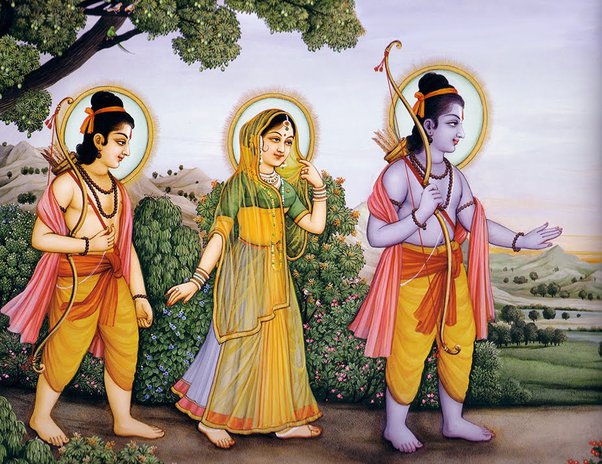
So His going into exile for fourteen years together with Lakṣmaṇa and Sītā can show us so many līlās, like kṛpā on all Daṇḍakāraṇya ṛṣi-munis, abduction of Sītā Devī by Rāvaṇa, and delivering Her from Laṅkā; the friendship developed by Śrī Rāmacandra with Sugrīva and Hanumān Jī, etc. and finally making a bridge from Rāmeśvaram to Laṅkā to invade Laṅkā to kill Rāvaṇa, to deliver Sītā Devī, etc. etc. In this context all those monkeys got the golden opportunity to serve Śrī Rāmacandra. Actually the abduction of Sītā Devī the svarūpa-śakti of Śrī Rāmacandra by Rāvaṇa was not at all possible. Śrīmān Mahāprabhu Śrī Kṛṣṇa Caitanya Deva in course of His South Indian trip, already has shown us the evidence from Kūrma Purāṇa that—what to speak about the abduction of Sītā Devī by Rāvaṇa, even Rāvaṇa could not see Her. Actually at the time of abduction, Sītā Devī already took the shelter of Agni Deva and the shadow Sītā (just like Sītā) was abducted by Rāvaṇa for the nourishment of the whole Rāma-līlā. The Vālmīki Rāmāyaṇa was compiled 60,000 years before the appearance of Rāmacandra, because Śrī Rāma-līlā is eternally present in the eternal world. This Rāmāyaṇa is full of tattva-siddhānta-vicāra and not so easy for common man to follow, so the compilation of Tulasī Dāsī Rāmāyaṇa was possible by the causeless mercy of Śrī Rāmacandra. Finally, when Śrīla Tulasī Dāsa Jī Mahārāja was at Citrakūṭa parvata (hill) at his bhajana-kuṭīra, busy compiling Śrī Rāma Carita Mānasa which is full of all sweet siddhānta-vicāra, then one day it was Rāmanavamī tithi—Śrī Rāma-lālā directly appeared in front of him to accept all flower, candana, garland, etc. from him to bestow full kṛpā on him. Śrī Rāma avatāra is the special avatāra to teach us humbleness, dutifulness, softness, honesty, morality, etc. etc. which is really beyond our imagination.
We should always remember the exclusive idealism shown by Him. Also those Daṇḍakāraṇya-vāsī muni-ṛṣi they wanted to kiss and embrace Śrī Rāmacandra with mādhurya-rasa-bhāva, but this was not possible for Śrī Rāmacandra to approve their desire, because He was Maryādā-Puruṣottama avatāra, so He promised them to fulfil their desire next when He can come in the form of Śrī Kṛṣṇa—the līlā Puruṣottama Bhagavān, at Śrī Vraja-dhāma in Dvāpara-yuga.
Hari Hari Bol