
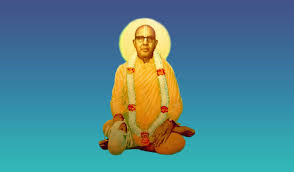
— Gauḍīya Saṅghapati Mahāmahopadeśaka Bhaktiśāstrī Śrīmad Bhaktisāraṅga Gosvāmī Mahārāj– weekly Gaudīya Patrīka 15th Volume —1936–37, 1st issue( Vidyā O Vedanā)
When the intellect nurtures and fosters the growth of the heart’s higher tendencies, the influence of sādhu-saṅga (association with the pure sadhu) enables the individual to shed their ego and advance on the path of altruism, becoming “tṛṇād api sunīca”. The pursuit of “vedyaṁ vāstavaṁ atra vastu śivadaṁ”—the discovery of the auspicious and eternal reality—causes the heart to melt in divine affection. With a steady intellect and a tranquil heart, the individual ascends to the state of viśuddha-sattva (pure existence) and becomes qualified to enter the playful abode (vilāsabhūmi) of Lord Adhokṣaja.
“brahmabhūtaḥ prasannātmā na śocati na kāṅkṣati
samaḥ sarveṣu bhūteṣu madbhaktiṁ labhate parām.”
“One who is established in the Brahman platform is joyful, free from lamentation and desire, sees all beings with equality, and attains supreme devotion unto Me.”
When such a tranquil heart becomes imbued with vedanā (deep spiritual feeling) for Lord Adhokṣaja, the soul transcends the inert material world, receiving the vision of cit-vilāsa (spiritual play) through the grace of the Guru. In this state, the soul becomes an enjoyer of the transcendental rasas of dāsya (servitude), sakhya (friendship), vātsalya (parental affection), and mādhurya (conjugal love). The manifestation of these rasas can only occur in a heart illuminated by sattva-ujjvala (effulgent Transcendental purity of bhāva).
“vyatītya bhāvanāvartma yaś camatkāra-bhārabhūḥ
Hṛdi sattvojjvale vārddhaṁ svadate sa raso mataḥ.”
He who transcends the pathways of contemplation and is laden with the weight of wonder—when such divine essence tastes sweet in the effulgent purity of the heart, that alone is recognized as true rasa.
If the study of the Vedas, their auxiliaries, or the Vedāṅgas fails to invoke the awakening of rasa within the heart, then such scholarship is to be lamented.
śrutam apy aupaniṣadam dūraṁ hari-kathāmṛtāt ṣanna santi drava-citta-kampāśru-pulakādayaḥ.”
Even the highest revelations of the Upaniṣads pale before the nectar of Hari’s pastimes. If there are no tears, no trembling of the heart, no ecstatic thrills arising from hearing them, what value do they hold?
The Lord Himself is the veditavya vastava vastu—the ultimate reality to be known through vedas. May the immaculate Viśuddha–Sarasvatī protect us from that self-destructive learning which does not awaken within the heart a deep feeling (vedanā) for Him. Let us become disciples and worshippers of the supreme school of divine knowledge (para-vidyā-pīṭha), unclouded by the aridity of dry intellectualism.
The celebrated scholar of Malabar, Śaṅkara, who relied solely on the impersonal realization of knowledge and sought the Lord through intellect, deemed Him an object graspable only by the faculty of reason. In his meditative absorption, no heartfelt vedanā for the Lord arose. Thus, he could not transcend the realm of abstract reasoning, failing to attain the loving domain of divine intimacy. His meditative state resembles that of the bodhisattvas, who, seated beneath the Bodhi tree, merely achieved detachment but did not cultivate love for the Supreme Being. Such arid intellectualism and misguided scholarship are not our ideals.
Our inspiration lies in the example of Baudhāyana, who, having renounced dry speculative practices, took refuge at the Baudhāyana-kuṭīra in the sacred land of Puruṣottama. There, near the tomb of the saintly Haridāsa on the seashore and under the shadow of the golden Caṭaka-parvata, Baudhāyana achieved the illumination of Gopīnātha’s sublime and unnata–ujjvala–rasa (conjugal love for Rādha–Kṛṣṇa) through the intimate service of Gaura and Gadādhara.
“yugāyitaṁ nimeṣeṇa cakṣuṣā prāvṛṣāyitam Śūnyāyitaṁ jagat sarvaṁ govinda-virahena me.”
“A single moment feels like an age; my eyes pour torrents of tears, and the entire world seems void in Govinda’s absence.”
This Gaura-vāṇī dismisses the aforementioned meditative states and instead calls forth within our hearts a profound vedanā—a love-laden pang that surpasses even the ecstasy of Brahman-realization a millionfold. This poignant longing for Govinda is far more joyous than the illusory happiness experienced by a heart devoid of this sevamayi vedanā (service-oriented feeling). What is the value of happiness experienced in the deception of a heart bereft of Govinda’s loving service? The pain of separation and union with mundane desire (madana) is incomparable to the sacred pangs of separation and union with Madana-mohana (Kṛṣṇa). Far removed from the sterile joy of Brahman realization, we find supreme bliss in the pain of Govinda-viraha, following in the footsteps of the devotees of Gaura. Śrī Caitanya Mahāprabhu, in the courtyard of Śrīvāsa, called Duḥkhīdevī (a devotee afflicted by love-longing) by the name Sukhī (joyful), thus glorifying the exalted nature of this divine sorrow.
May we too embrace this pang of Govinda-viraha in our hearts and cry out, “Hā Kṛṣṇa! Hā Kṛṣṇa!” with resounding lamentation, and thus cross the ocean of material existence into the eternal embrace of His divine love.
“O knower of Brahman! The tranquil bliss of Brahman that you envision as devoid of sorrow will soon transform into deep vast anguish, like the upheaval of a seemingly calm ocean. On the other hand the avatar of the vayu ( aprākṛta vāyu), Madhvācārya, experienced higher rasa by surrendering his tranquil heart and agitating it in pangs of longing for Kṛṣṇa, and thus attained the title of Jagadguru.”
The material scientist has proclaimed:
“Both coolness and warmth are delightful when they co-exist, and neither of them is so when they exist apart by themselves. Consequently, both are painful in the absence of the other. Moreover, when hunger and food exist together, they are both delightful. But in the absence of food, hunger is painful, and vice versa.”
However, within the realm of divine love, both union (sambhoga) and separation (viraha) are sources of ecstasy. In sāyujya-mukti (merging liberation), where the absence of feeling prevails, the fleeting semblance of happiness ultimately manifests as sorrow. Some argue that the aim of liberation is the cessation of pleasure and pain, but this is attainable only through love. For in the domain of divine love, both the object of love (the Lord) and its subject (the devotee) delight in sacrificing everything, even their very lives, for the other’s happiness. In such a realm, the material notions of pleasure and pain have no place. The feelings of a conscious being differ vastly from those of inert matter (jada chetana ) or mixed consciousness (misra–chetana).