
Without taking medicine nobody can be cured. Without doing anything positively, we cannot get effective result. In spite of our evil desires imbibed in the mind through cycles of births and deaths, we should not stop our bhajana.
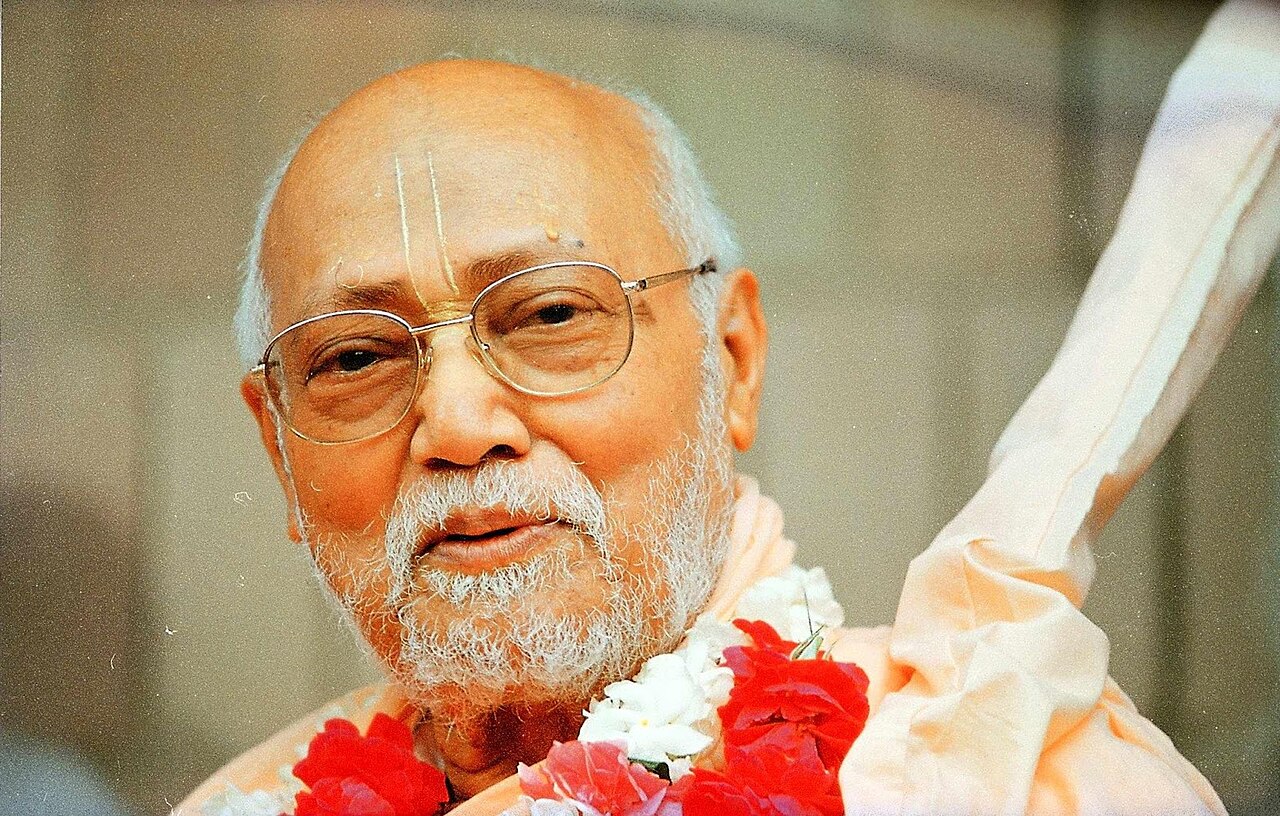
Question to Śrīla Bhakti Ballabha Tīrtha Gosvāmī Mahārāja – (1) My mind is filled with many unwanted desires and it oscillates making me feel good and at times bad about me. I cannot control my senses and I am afraid of spiritual fall. In theory, I know the goal of life but my actions are not consistent with the goal. I also feel bogged down with everyday problems. I know only pure devotion is the solution to all my problems but how can I receive mercy from pure devotees with my undesirable wants! (2) I am praying to you for some kind of service by which I can engage my mind and by which my other desires will go away so that I can get devotion and harmonise my life and become a good practitioner of bhakti-yoga.
Controlling Mind
Received your letter dated and noted the contents. You have expressed your heart openly in your letter. Whatever you have written is the problem of all conditioned souls of the world, at least those who are aspirants—votaries.
I have the opportunity, in this context, to remember the teachings of the Supreme Lord Śrī Kṛṣṇa in His reply to the question of Śrī Arjuna in the Gītā (6.34):
cancalaṁ hi manaḥ kṛṣṇa
pramāthi balavad dṛḍham
tasyāhaṁ nigrahaṁ manye
vāyor iva su-duṣkaram
Purport of the verse with two implications: — Śrī Arjuna said:
(1) “O Lord Kṛṣṇa! You have already instructed me that by the discriminating power of intelligence between good and evil, right and wrong one should restrain or regulate the mind. But I fear that mind has the power even to crush our conscience or discriminating capability. Therefore, it seems extremely difficult for me to control the mind, which may be compared with the useless endeavour to restrain the velocity of the wind.”
(2) “O Lord Kṛṣṇa! You have already instructed me to attain maintenance of balance; he who realises joy and sorrows equally with all living beings in this world is a best yogī. But in spite of that, I fear my mind has got the power even to crush the maintenance of balance. Therefore, it appears extremely difficult for me to control the mind as it is compared with the difficulty to restrain the velocity of wind.”
sri-bhagavān uvāca
asaṁśayaṁ mahā-bāho
mano durnigrahaṁ calam
abhyāsena tu kaunteya
vairāgyeṇa ca gṛhyate
(Bhagavad-gītā 6.35)
“O mahā-bāho (chief of heroes)! I admit whatever you have stated is true but it is the special instruction of yoga-śāstra that the restless mind, which is difficult to resist, can be brought under control gradually by repeated devotional practice as well as non-attachment to worldly (non-eternal) objects.”
The Sanskrit word vairāgya has got two implications—(1) non-attachment to worldly non-eternal objects and (2) positive significance, attachment to the Supreme Lord: viśiṣṭe parama-puruṣe rāgaḥ, tasya bhāvaḥ vairāgyam. As much attachment as a votary shall have for the Supreme Lord, so much detachment he will obtain from non-eternal objects of the world.
When a child tries to stand up and to walk, he falls on the ground a hundred times, yet when he does not stop trying ultimately he succeeds. If a child, after trying several times, stops trying further, he will never be able to stand up and walk.
One who wants unfailing positive eternal welfare should go through the instruction of the following verse of the Kaṭhopaniṣad very carefully:
śreyas ca preyas ca manuṣyam etas
tau samparītya vivinakti dhīraḥ
śreyo hi dhīro ‘bhipreyaso vṛṇīte
preyo mando yoga-kṣemān vṛṇīte
(Kaṭhopaniṣad 1.2.2)
Quality is Better than Quantity
Kaṭhopaniṣad ascertains two paths – (1) path for eternal welfare and (2) path for hedonism (belief in worldly pleasure as the proper aim). These two paths only exist in the human species. The wise human beings after knowing the proper implications of these two paths consider the path of eternal welfare as the cause of emancipation and the other path of hedonism as the cause of bondage. They adore the path of eternal welfare relinquishing the path of hedonism. But unfortunate and unscrupulous persons lacking in conscience, accepting the path of hedonism, engage all their energy only to accumulate material wealth and preserve wealth and property thus acquired only to get immediate benefit of sense enjoyments without thinking about its consequence. More than ninety-nine percent of people in this world are supporters of hedonism. It seems like nectar at the time of sensuous pleasure but its consequence is deadly poison. In the path of eternal welfare, at the time of spiritual practice, it appears to be like poison because the votary has to control his sense organs and has to restrict his evil propensities but the consequence of such austerities and self-discipline is ambrosia. Sincere devotees of such a path of eternal welfare are very rare in this world, which is like a prison house.
Devotees in the highest degree are less in number. We are not to give importance to increase numbers. One person of good character can do good to numerous persons but millions of characterless persons cannot do any good even to a single person in this world. If we are very particular to increase the quantity, we are to sacrifice quality. By that what actual benefit we shall get? A pure devotee—śuddha-bhakta—is very rare in this world.
(From the divine letters of Śrīla Bhakti Ballabha Tīrtha Gosvāmī Mahārāja — ‘Affectionately Yours’)