
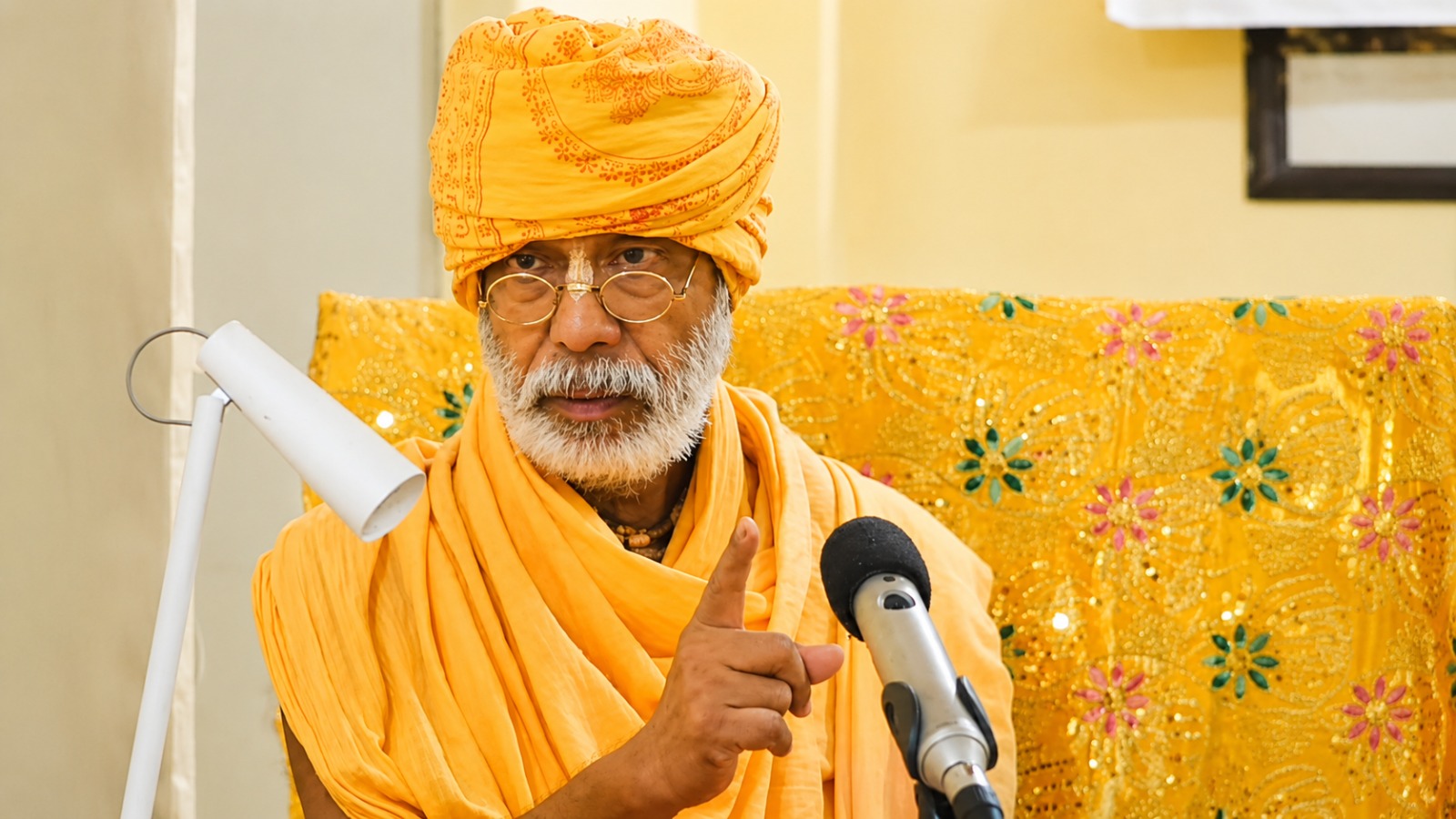
Gauḍīya Goṣṭhī-pati Śrī Śrīla Bhakti Siddhānta Sarasvatī Gosvāmī Ṭhākura Prabhupāda said that—“Most possibly I have given trouble to many people. Some of them might have thought about me that I am their enemy because I was obliged to speak the Absolute Truth for the absolute benefit of their bhajana. I was bound to put them in trouble for their absolute benefit. I hope that they can understand this point someday in the future, in some life. I wanted to engage them in unalloyed devotional service, so they misunderstood me.”
The Prabhupāda further said that—“Everybody is saying that today is the tirobhāva of my Gurupādapadma, but actually I think today is the āvirbhāva-tithi of my Gurupādapadma.”
It is only because of my cheating tendency that Gurupādapadma disappeared from this world. Due to my desire for kāminī-kāñcana, lābha-pūjā-pratiṣṭhā, he wanted to disappear from this world to cheat me. Even though Śrīmān Mahāprabhu and all our Guruvarga came to this world to distribute an ocean of nectar, still, due to my kapaṭa-bhāva, I could not receive even one drop.
Śrīla Locana dāsa Ṭhākura expressed this in a wonderful bhajana—
e’lo gaura-rasa-nadī kādambinī ha’ye
bhāsāilô gauḓa-deśa prema-bṛṣṭi diye
The river of gaura-rasa (the ecstatic mood of Lord Caitanya) came as a bank of rain clouds (kādambinī), flooding the land of Gauḍa (Bengal) with a shower of prema (divine love).
nityānanda rāya tāhe māruta sahāya
yā̃hā nāhi prema-bṛṣṭi tā̃hā la’ye yāya
Nityānanda Rāya assisted as the wind (māruta), blowing that shower of prema to those places where the rain of love had not yet fallen.
huḓ huḓ-śabde āilô śrī advaita-candra
jala-rasa-dhārā tāhe rāya rāmānanda
Śrī Advaita-candra came as thunderclaps, and Rāmānanda Rāya came as rain, letting loose a stream of rasa (spiritual mellows).
cauṣaṭṭi mahānta āilô meghe śobhā
kôri’ śrī rūpa-sanātana tāhe hôilô bijuri
The sixty-four great saints came, beautifying that cloud bank, and Śrī Rūpa-Sanātana flashed as its lightning (bijuri).
kṛṣṇadāsa kavirāja rasera bhāṇḍār
ĵatane rākhilô prema hema-kumbha bhôri’
Kṛṣṇadāsa Kavirāja became the storekeeper (bhāṇḍārī) of that rasa. He collected that prema and kept it carefully, filling a golden pot.
ebe sei prema la’ye jaga-jane dilô
e-dāsa locana bhāgye bindu nā mililô
They distributed this prema to the people of the world, but due to his misfortune, this Locana dāsa (the author) did not receive a single drop.
Also Śrīla Prabodhānanda Sarasvatī Ṭhākura expresses the same mood out of his extreme dainya-bhāva—
prasārita-mahā-prema-pīyūṣa-rasa-sāgare
caitanya-candre prakaṭe yo dīno dīna eva saḥ
With the rising of the moon (Caitanya) the ocean of prema rasa expands in all directions. Those wretched unfortunate souls who deny to drink this nectar, are truly condemn.
How can I say ‘My Gurupādapadma’?
How much dedication and sacrifice do I have unto the lotus feet of Gurupādapadma? I can only use the word “my” when Gurupādapadma has become my only worshipable object—I mean my very life and soul. When I feel that I am almost dying without him, then and only then is it possible to use the word “my.” Just as a fish feels complete suffocation when taken out of the water and cannot survive any longer, similarly, a sat-śiṣya cannot survive without Gurupādapadma.
If all my possessions, words, deeds, and actions are meant only for the service of Gurupādapadma, without the slightest smell of lābha-pūjā-pratiṣṭhā, then and only then can I say, “My Gurupādapadma.”
sarirarm vasu vijnanam vasah
karma gunan asun
gurv-artham dharayed yas tu
sa sisyo netarah smrtah
One whose body, wealth, knowledge, possessions, activities, qualities, and very life are maintained only for the sake of his guru is a genuine disciple, and not others.
But what is our condition when it comes to serve Guru-Vaishnava?
Śrī Śrīmad Bhaktivedānta Vāmana Gosvāmī Mahārāja usd to say that –“It is not possible for someone to obtain knowledge of the Absolute Truth from Śrī Gurudeva if he does not offer him all that he possesses and, indeed, his very self. It is not possible to obtain Śrī Gurudeva’s mercy simply by offering him material objects. Someone qualifies as a true disciple only if he becomes niṣkiñcana (without material possessions) by offering Śrīla Gurudeva everything he has, including his own self. If I simply declare, ‘O Gurudeva, everything belongs to you alone!’ but I ‘keep the keys to my safe with me’, then I am revealing that I do not trust him, which is not at all indicative of the most elevated stage of genuine service to Śrī Guru (guru-sevā). When the disciple surrenders from within and keeps nothing as his own, then Śrīla Gurudeva considers that intimate and loving disciple (viśrambha-snigdha śiṣya) as his own.”
Also we can find the following śloka in theUpaniṣads—
etad akṣaraṁ gārgī aviditvā asmāt lokāt poiti sa kṛpaṇa
ya etad akṣaraṁ gārgī viditvā asmāt lokāt poiti sa bramanaha
(From Bṛhadāraṇyaka Upaniṣad 3.9.10)
Yājñavalkya giving advice to Gārgī that without realizing that absolute akṣara brahma, if somebody going away from this material world then he is surely kṛpaṇa (miser). He who going to leave this world after realizing that absolute akṣara brahma, then he is surely a brāhmaṇa.
From Srimad Bhagavatam we can also remember the following sloka–
daridro yas tv asantuṣṭaḥ
kṛpaṇo yo ’jitendriyaḥ
guṇeṣv asakta-dhīr īśo
guṇa-saṅgo viparyayaḥ (ŚB 11.19.44)
My dear friend Uddhava, one who is enriched with good qualities is actually said to be rich, and one who is unsatisfied in life is actually poor. A wretched person is one who cannot control his senses, whereas one who is not attached to sense gratification is a real controller. One who attaches himself to sense gratification is the opposite, a slave.
Gauḍīya Goṣṭhī Pati Śrī Śrīla Bhakti Siddhānta Sarasvatī Gosvāmī Ṭhākura Prabhupāda said that —“ when my eyes are going to reject material darśana, when my speech going to reject speaking all material things, when my ears are going to reject to hear all material thing, and when my mind going to reject all material thoughts in the form of wealth, woman, position, then we can think about kṛṣṇa bhajana and approach one Sad-Guru . Not before that.”
In Śrīmad Bhagavatam Śrī Kṛṣṇa Bhagavan speaks to Uddhava Ji Maharaj— “daridro yas tv asantuṣṭaḥ kṛpaṇo yo ’jitendriyaḥ ” which means that those who have no control over their senses, they are kṛpaṇa (miser). Common people think if one is not spending his money then he is miser, but the actually meaning of miser (kṛpaṇa) is, if we are not spending our energy for the service of Kṛṣṇa (hari bhajana).
For example, when my eyes are not under my control, then i am losing energy by looking here and there. But if I can look at Śrī Guru-Vaiṣṇava-Bhagavan then it is not a misuse of my looking energy (vision power). Similarly, if I use my ears for listening to some material sounds then it is also the misuse of my hearing organ, because I use my hearing energy to listen something material, but if I use my ears for hearing absolute Harikatha then my ears are properly engaged. So in this way we can see that all our sense organs are running different direction, and it is our duty to engage them properly, so that we can get eternal maṅgala (benefit).
akṣṇoḥ phalaṁ tvādṛśa-darśanaṁ hi
tanoḥ phalaṁ tvādṛśa-gātra-saṅgaḥ
jihvā-phalaṁ tvādṛśa-kīrtanaṁ hi
su-durlabhā bhāgavatā hi loke (Cc Madhya 20.61)
“‘My dear Vaiṣṇava, seeing a person like you is the perfection of one’s eyesight, touching your lotus feet is the perfection of the sense of touch, and glorifying your good qualities is the tongue’s real activity, for in the material world it is very difficult to find a pure devotee of the Lord.’ ”
tad eva ramyaṁ ruciraṁ navaṁ navaṁ
tad eva śaśvan manaso mahotsavam
tad eva śokārṇava-śoṣaṇaṁ nṛṇāṁ
yad uttamaḥśloka-yaśo ’nugīyate (ŚB 12.12.50)
Those words describing the glories of the all-famous Personality of Godhead are attractive, relishable, and ever-fresh. Indeed, such words are a perpetual festival for the mind, and they dry up the ocean of misery.
na yad vacaś citra-padaṁ harer yaśo
jagat-pavitraṁ pragṛṇīta karhicit
tad dhvāṅkṣa-tīrthaṁ na tu haṁsa-sevitaṁ
yatrācyutas tatra hi sādhavo ’malāḥ (ŚB 12.12.51)
Those words that do not describe the glories of the Lord, who alone can sanctify the atmosphere of the whole universe, are considered to be like a place of pilgrimage for crows and are never resorted to by those situated in transcendental knowledge. The pure and saintly devotees take interest only in topics glorifying the infallible Supreme Lord.
tad vāg-visargo janatāgha-samplavo
yasmin prati-ślokam abaddhavaty api
nāmāny anantasya yaśo ’ṅkitāni yat
śṛṇvanti gāyanti gṛṇanti sādhavaḥ (ŚB 12.12.52)
On the other hand, that literature which is full of descriptions of the transcendental glories of the name, fame, forms, pastimes and so on of the unlimited Supreme Lord is a different creation, full of transcendental words directed toward bringing about a revolution in the impious lives of this world’s misdirected civilization. Such transcendental literatures, even though imperfectly composed, are heard, sung, and accepted by purified men who are thoroughly honest.
ascaryam etad dhi manushya-loke sudhām parityajya visham pibanti
nāmāni nārāyaṇa-gocarani tyaktvānya -vacaḥ kuhakah paṭhanti
(Mukunda Mala Stotra)
The greatest wonder in human society is this: People are so incorrigible that they reject the life-giving nectar of Lord Nārāyaṇa’s names and instead drink poison by speaking everything else.
Real auspiciousness of the living entity is when he completely dedicates his senses together with the mind in the seva and glorification of Śrī Guru-Vaiṣṇava-Bhagavan. The entire life is meant to act practically towards awakening our eternal good fortune (śreyācāraṇa).
Gaura Hari Hari Bol