
— Translated from Gauḍīya, Vol. 15, Issue 40 (1935), published under guidance of Śrīla Bhaktisiddhānta Sarasvatī Ṭhākura Prabhupāda.
Are the myriad reflections and ideals of “bhakti” that prevail in the marketplace of religion — and which are celebrated by the multitudes — truly the essence of pure devotion that enchants Śrī Kṛṣṇa?Śrīla Rūpa Gosvāmī, in his Bhakti-rasāmṛta-sindhu, has delineated śuddhā-bhakti as that which is untainted by ulterior desires (anyābhilāṣitā-śūnyā), devoid of the coverings of impersonal jñāna, fruitive rituals whether regular( nitya) or occasional( naimittika), and the pursuits of haṭha-yoga or rāja-yoga.As Śrīla Narottama Ṭhākura Mahāśaya has also sung:
karmī, jñānī, miṭhyā-bhakta, na habe tāte anurakta —
“One should not be attached to the karmī, the jñānī, or the false devotee.”
Therefore, what parades through the world as “devotion,” while bearing only an outer semblance of true bhakti, is in fact false devotion — mithyā-bhakti — and it is this which is most widely embraced by society.
To reestablish the pristine form of pure devotion as preached by Śrīman Mahāprabhu and manifested through the current of the Śrī Rūpānuga sampradāya, the extraordinary endeavours of Oṁ Viṣṇupāda Śrīla Bhaktivinoda Ṭhākura and Oṁ Viṣṇupāda Śrī Śrīla Bhaktisiddhānta Sarasvatī Gosvāmī Prabhupāda stand unmatched in the sacred history of spiritual revolution.
Through the penetrating vision of Bhaktivinoda-gaura-vāṇī, we are granted the rare opportunity to perceive how both bhoga (sense-enjoyment) and tyāga (renunciation) can deceitfully masquerade as bhakti, thus giving rise to profound confusion —such vision is scarcely available elsewhere.
Ālekhya-Bhoga-Ceṣṭā —( Attempt to “Enjoy” the Painting of Deities)
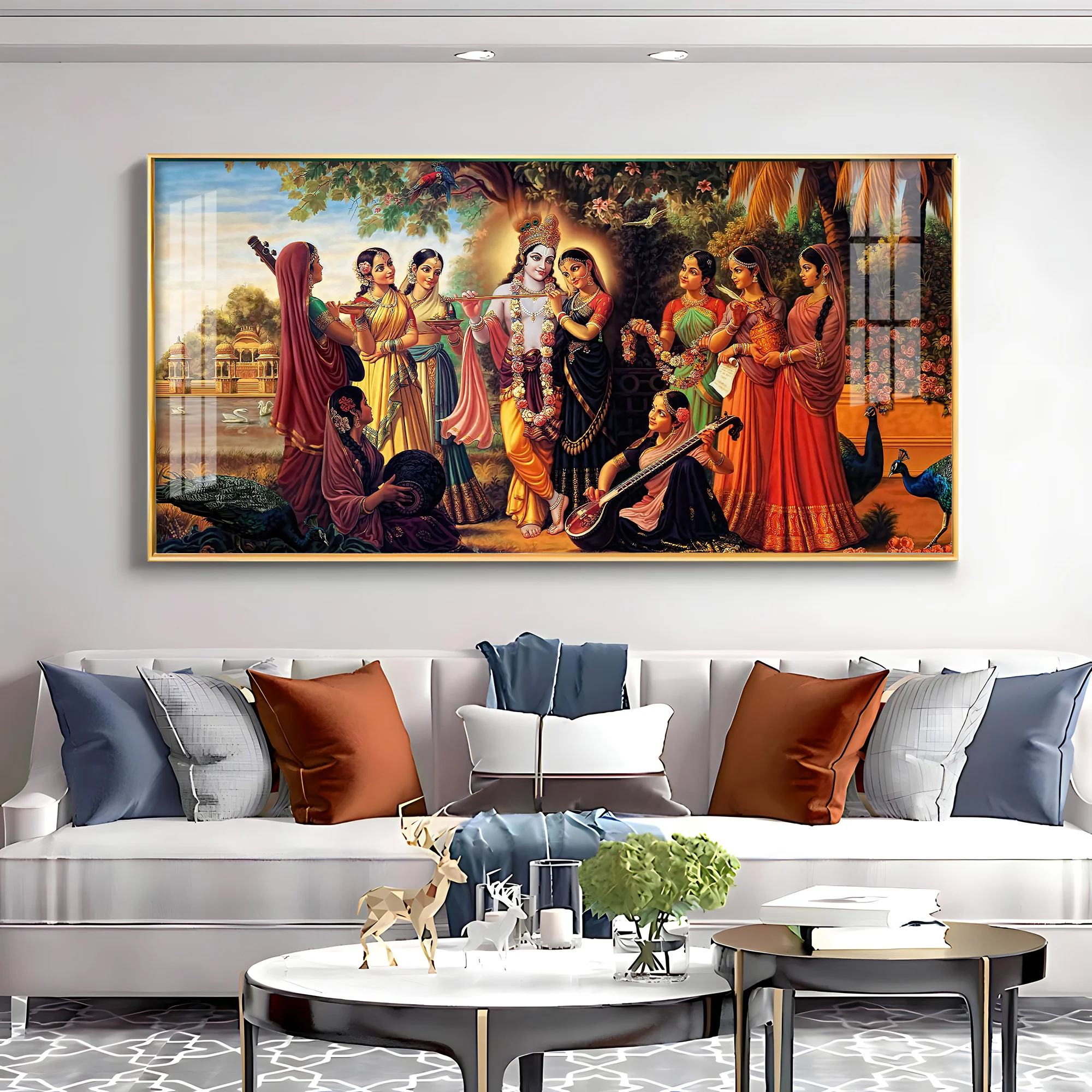
In the Śrīmad-Bhāgavatam and other sacred śāstras, we hear of eight manifest forms of the Lord’s Transcendental forms such as lekhya and lepya, etc .The Supreme Lord, sac-cid-ānanda-vigraha, the transcendental Adhokṣaja, out of boundless compassion, manifests these wondrous forms — such as ālekhya (painted depictions) — to gradually purify the coarse intellect of embodied beings and reveal to them His eternally perfect madhyama-ākāra form that ever abides in Goloka.
From the lotus mouths of our ācāryas, we have heard a most profound truth:The ālekhya-avatāras, being aprakṛta (supra-mundane), are the draṣṭā — the Seers — not the seen. Their worshippers too are not “seers” in the worldly sense, not mere consumers of form or beauty. One cannot “enjoy” the ālekhya’s beauty; it is not meant for our visual gratification.Rather, the nitya-siddha sac-cid-ānanda form of the ālekhya-avatāra is He who relishes the beauty of our own nirmala svarūpa — our pristine, service-filled constitutional eternal form. True ālekhya-darśana occurs only when we present this pure selfless form before Him, allowing Him to taste its beauty. (In this sense, “bhoga” — divine enjoyment — refers not to our enjoyment of the Lord’s image, but rather His acceptance of the loving service moods (sevā-vṛtti) offered through our realized, transcendental identity.) Only then does darśana become sevā in its truest, most sacred sense.
This exalted and esoteric conception of Vaiṣṇava darśana — where the seen becomes the Seer and service becomes the sole offering — remains unparalleled and scarcely revealed elsewhere in the world of spiritual thought.
We often encounter, in the opulent drawing rooms of wealthy men attached to sense objects, in the shops of tradesmen, and within the so-called āhnika-gṛhas(meditation chambers)or Thakura griha ( Diety rooms )of self-proclaimed religious individuals, a wide array of vividly colored images —diety paintings are meticulously displayed. These images, though externally adorned in the sacred form of deities, are curated not with the intent of sevā but to gratify the aesthetic appetite of a bhoga-lolupa dṛṣṭi — a gaze intoxicated by sensual allure.Undoubtedly, these paintings are of the Ṭhākura-Devatā( Paintings of Kṛṣṇa)themselves. Yet, rather than adorning their walls with depictions of pastoral landscapes or worldly, immodest portrayals of women, they have chosen divine forms as the decoration of choice — not for bhagavad-bhakti, but for a subtle sense-enjoyment masked as reverence.
One day, within the splendid confines of a newly-constructed palatial residence belonging to a man of considerable wealth, our eyes were drawn to a gallery of Viṣṇu’s paintings — exquisite paintings reflecting the zenith of India’s sacred artistry. It was nothing short of an enchanting exhibition of sacred imagecraft. To call that space an unparalleled museum of divine pictorial aesthetics would not be an overstatement.Yet alas, that space was not a maṇḍira or ālayam — it was a merchant’s office.
*The affluent householder,had it’s feet sprawled toward the sacred ālekhya-svarūpas, reclined upon a plush seat, exhaling dense clouds of smoke from an exorbitantly priced tāmra-kuṭa (copper-hued cigar). The room, adorned with divine iconography, gradually filled with spiraling veils of smoke. From afar, the chamber gave the illusion of a temple sanctum graced with fragrant incense — yet the reality was far removed.
The lord of the house, immersed in tāmbūla-chewing and clouding the air with smoke, was engaged in loud and animated negotiations with a band of brokers. One wonders — do others too mistake such vulgar cacophony and smoke-plumed ostentation as some simulacrum of ārati?
For those untouched by the deceit of false prestige, who have not imbibed the art of pretending reverence to display pseudo-authority, what sanctity could such a space possibly hold?
Why, one may ask, have these Viṣṇu paintings been permanently etched upon the walls of this businessman’s den? Are they arcā? And if they are, why are they not worshipped as arcā? Would such irreverence — stretching one’s legs and puffing smoke in the presence of the deity — ever be countenanced in front of revered elders?
And is there not hidden — deep within this preference for divine paintings over mundane landscapes — a more refined, more putrid, and perilously perfumed thirst for subtle kāma, a secret lust cloaked in fragrant sanctity, seeking to relish Viṣṇu Himself through the senses under the guise of reverence?
Indeed, is not this refined sense-enjoyment of the ālekhya-rūpa of Bhagavān a more perilous form of bhoga masked in the garb of bhakti?
Those who adorn their drawing rooms with scenic landscapes, or with picturesque “sceneries” meant to soothe the eyes and enhance the aesthetic charm of their homes—such individuals’ intentions are quite transparent and easily discerned by all. Their motive is bhoga, the enjoyment of the senses, and they make no effort to veil it under any religious pretense.
But what of those who, under the guise of piety, seek societal prestige as “religious” men, while secretly turning Śrī Viṣṇu Himself into an object of their enjoyment? Who—by means of preserving sacred images or paintings of Viṣṇu—strive to delight their extroverted senses under the mask of devotion? This undetectable and formidable impulse of vieled bhoga-tendency — to extract sensual pleasure through the mūrti of the Lord, while pretending devotion — remains far beyond the grasp of understanding for almost hundred percent of the world.
This admixture of bhakti with latent enjoyment—this insidious and veiled intent to experience satisfaction of senses through the divine—is no mere isolated phenomenon. It has seeped deep into the very marrow of the so-called sahajiyā-sects and indeed, the entire extroverted wordly people. Such bhoga-tinged religiosity is not devotion—it is the very essence of pauttalikatā (idol-worship tainted with enjoyment).
And curiously, even those who condemn the so-called idolaters as “pauttalikas” are themselves not free from the grip of bhoga-buddhi. They too harbor an unspoken, insatiable hunger to enjoy divine forms through vision. Thus, they merely belong to another category of pauttalikas—no less entangled, merely differently clothed.
A question may naturally arise: Are the various sacred images, present within the hallowed halls of pure devotional institutions—such as the Gauḍīya Maṭhas, their transcendental auditoriums (śravaṇa-sadana), or their meditation chambers (āsana-ghara)—merely ornamental, intended for the aesthetic adornment of space? Are these paintings worshiped in the same manner as the arca-mūrti?
The answer is this: Within the sanctified dwellings of śuddha-bhaktas—where the congregations of the Sārasvata lineage assemble—these ālekhya forms are perpetually worshiped through the continuous flow of hari-kathā and kīrtana. The illustrations that appear in transcendental periodicals such as The Gauḍīya( Weekly Bengali Magazine), Dainika Nadiyā-Prakāśa( Daily Bengali Newspaper), The Harmonist( English Magazine), Paramārthī( Odiya Magazine), Kīrtana, Bhāgavata( Hindi magazine), and others, are not mere artistic reproductions—they too are revered through the living current of hari-kathā-kīrtana.
True worship (arcana) of ālekhya is not through flowers or incense, but through the ecstatic outpouring of kṛṣṇa-kathā. This is the highest form of arcanā.The Sārasvata śravaṇa-sadana is not the parlour of a worldly man. It is no hall of idle chatter, nor a den for intoxication, chewing of betel leaf, gambling, card-play, or place for wordly entertainment.