
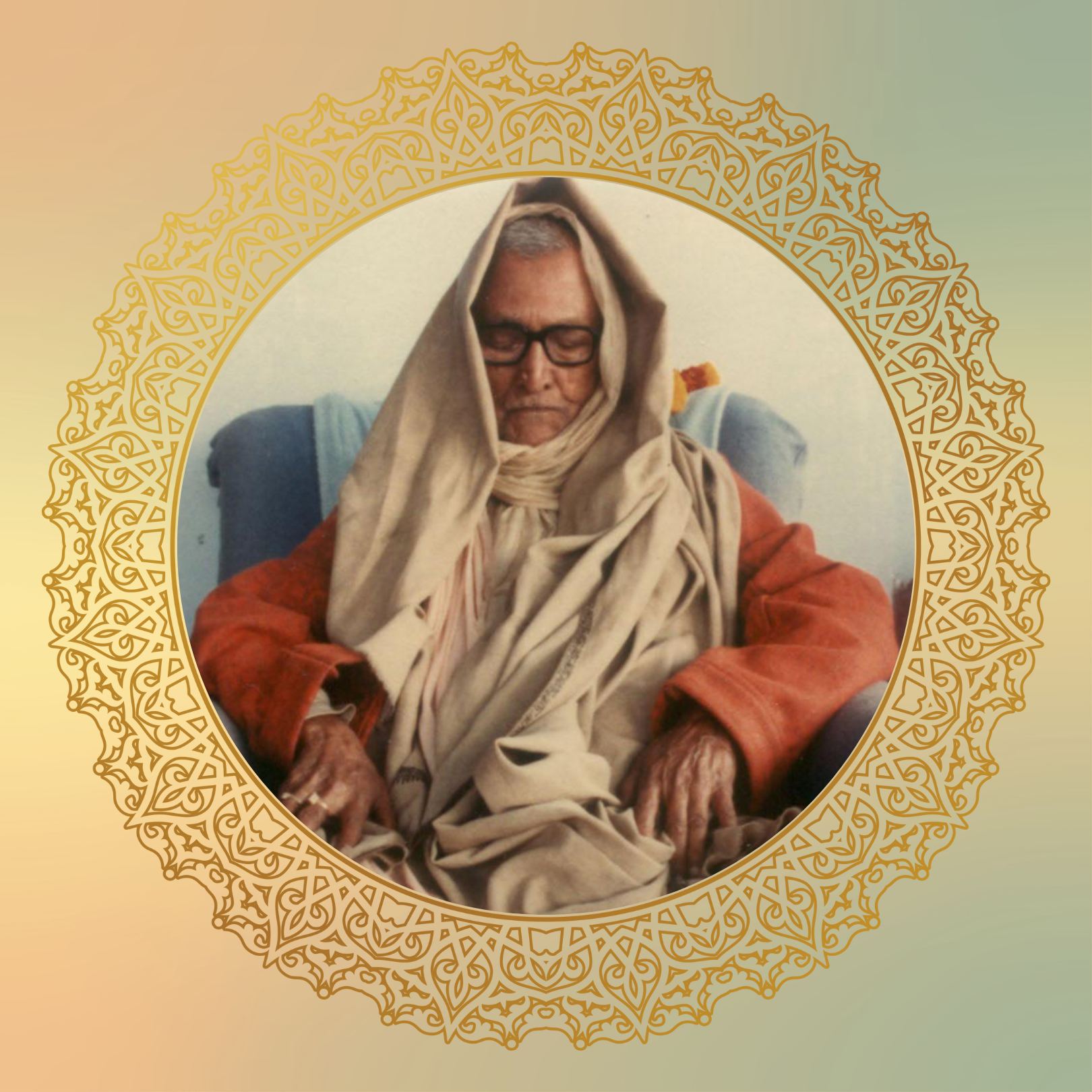
— Śrīla Bhakti Rakṣaka Śrīdhara Dev Gosvāmī Mahārāja
When I joined the mission, I wanted to read the books of the mission, including Bhāgavatam, but I did not find any encouragement from the authority. The real thing, the real requirement is to use our energy for the service of the Lord. By that process only may we go up, not by satisfying our intellectual necessities. Jñāna-śūnya-bhakti, an illiterate man may achieve a higher position in the realm of devotion than a literate man.
By the command of the Lord’s agent we may engage in literary culture, even as Mahāprabhu instructed Rūpa and Sanātana Gosvāmīs. Of course, they had acquired their knowledge to utilize it in the service of the sampradāya, the Gauḍīya disciplic succession. He also asked Raghunātha Bhaṭṭa to hear the Bhāgavatam from one who knew its real purport.
Jīva Gosvāmī was the only exception. Mahāprabhu asked him to study independently before he joined the Vṛndāvana party. He left his home and went to Benares, the center of all sorts of learning at that time. He studied different śāstras and then joined the others in Vṛndāvana. There, under the direction of Rūpa and Sanātana, he utilized his previously acquired knowledge in the service of the sampradāya.
When we get inspiration from above to study, that study is devotion. Otherwise a whim to study, to acquire scholarship, may not be bhakti proper, śuddha-bhakti.
The higher agent, the Vaiṣṇava, must utilize my energy. This energy must be spent to satisfy the higher world. Then it will be bhakti, it will be devotion. My mental imagination may bring sukṛti, but it won’t be śuddha-bhakti if I have a mind to help the sampradāya in a scholarly way. At my own risk I must go on with my study. It is accepted that when one is connected with the higher agent, then it will be considered devotion; otherwise it is not. It is an empirical attempt with some sort of good imagination. But this is not pure bhakti, pure devotion. Pure devotion is to carry out the orders descending from above, from the higher agent. The waves are coming; catch them and then act accordingly.
Our Godbrother Niśikānta Sānyāl said that when we are requested by a Vaiṣṇava to write or read any book, then that constitutes devotion. But when of our own accord we read any devotional book, that won’t give us devotion. That will be karma or jñāna. To surrender unconditionally to the instruction coming down to us, that is bhakti. All else is imitation. We find this warning everywhere. This we should understand.
Even reading the scriptures is not devotion unless done on the order of the Vaiṣṇava. Independent reading is only knowledge-seeking. By following the Vaiṣṇava, our bond with the Lord is guaranteed. Sādhu-saṅge Kṛṣṇa-nāma: in the company of the devotees, chanting the Name or whatever service we render is guaranteed to reach Him. And what is the guarantee of that? The reply will be, “His agent is saying so, and I am therefore engaged. I am not my master; I am his servant.” Such consciousness must be genuine, as far as possible. Success depends on this principle.
If we are appointed to preach, to do relief work here, we will execute that duty solely under the appointment of, and in the interest of, that higher plane, without any vanity. We should think, “I must put myself wholly at the disposal of the higher plane, and I shall not be eager to become an ācārya, a spiritual master. Otherwise, there is the danger of committing nāma-aparādha, offense against the Lord’s Name.”
Aśraddadhāne vimukhe ‘py aśṛṇvati, yaś copadeśaḥ śiva-nāmāparādhaḥ. It is an offense to give the Holy Name to the faithless. It betrays the motivation to gain a position in the higher sphere. This is a type of mundane attachment, a spiritual commerce, as is the habit of caste gosvāmīs and other spurious lines. Rather, the healthy attitude should be, “If I am appointed from above, then I shall serve as appointed, and that too, only for the interest of those who have appointed me. I am entering that rank solely for the interest of that higher land.” That is the pure and perfect approach.
Śrīla Śrīdhara Svāmī, the renowned commentator of Śrīmad-Bhāgavatam, has stated, sa cārpitā eva satī yadi kriyeta, na tu kṛtā satī paścād arpyeta: “Devotional service must be first offered to the Lord, then performed; not performed and offered afterwards.” We should already be committed when we come to serve. We should not collect capital and later try to utilize it in the service of the Lord. The commitment is to Him, to Kṛṣṇa.
We have come to know about Him for Him, not for our sake or for anyone else. We preach only because of the instruction from above. Only if we receive an instruction from that higher quarter, “Go and preach,” shall we do so. Only then will our preaching be service, and never if it is done for name and fame. We must have engagement from the higher office, and only on their behalf we shall preach; then it will be genuine preaching. Otherwise, it will be trading. Na sa bhṛtyaḥ sa vai vaṇik: Prahlāda Mahārāja has warned us against this trading mentality in the name of spiritual truth.
Devotion is a separate and distinct plane where we live only for the center. We aspire to live and move only as agents of the center, never disconnected from the center. This is Kṛṣṇa consciousness. Reality is for Itself, and we must strictly abide by this rule. He is for Himself, everything is for Him, we are for Him. Whatever we do must also be for Him. We must strictly adhere to this conception, and always examine whether what we are doing is for Him or for any other part, however important we may think it to be.
…………………………………………..
The Best Service is What Pleases the Master
From the life of Śrīla Rāmānujācārya
Once a Brāhmaṇa came to Śrīla Rāmānujācārya and said, “I wish to purify myself by serving you, for you are the best of devotees. By such service I shall be freed from the influence of material nature.” Yatirāja [Rāmānuja, the best of sannyāsīs] accepted the request, saying, “What you have said is correct, for one can be liberated only by service. If you wish to serve me, then you must stay here and do whatever I ask of you.” The Brāhmaṇa was very pleased by this reply, and said eagerly, “O master, tell me what is your desire. I will do anything you ask of me.” Seeing the man’s sincerity, Rāmānuja then told him, “O Brāhmaṇa, I have resolved to purify myself by taking daily the water which has washed the feet of a pure-hearted Brāhmaṇa. Now, by the grace of the Lord, you have come here. My order is that you stay here, and every day give me the water that has washed your feet. Only if you do this will you be able to render real service to me.” Although a very humble person by nature, the Brāhmaṇa could not refuse this direct order. From that time on, every day when Yatirāja returned from taking his noon bath in the Kāverī, he would take upon his head some of the water that had washed the Brāhmaṇa’s feet. One day, Rāmānuja was invited to take prasāda at the home of one of his householder disciples, and he went there directly after bathing in the river. After they had eaten, all the devotees began to discuss the glories of Lord Nārāyaṇa, putting various questions to Rāmānujācārya and listening intently to the explanations he gave. So sweet were these discussions that the devotees became unaware of the passage of time. Thus, by the time Yatirāja rose to leave the house, it was very late at night. When they arrived back at the āśrama, they found that the only person still awake was the pious Brāhmaṇa. “Why have you waited up so long for me?” asked Yatirāja. “Have you eaten yet?” “How could I think of eating,” replied the Brāhmaṇa, smiling, “when I have not yet rendered my service to you?” At this, Yatirāja smiled broadly and embraced the man, saying, “You are a wonderful devotee, the perfect servant of the Lord. By being absorbed only in thoughts of service, you have attained perfection.” Then he drank the water that had washed the Brāhmaṇa’s feet and offered it to all his other disciples.
— From chapter 8 of The Life of Rāmānujācārya, by Naimiṣāraṇya Dāsa. Rasbihari Lal & Sons. Vṛndāvana. 2005
………………………………………….
Sevā means to seek the satisfaction of Gurudeva
Once, a gṛhastha bhakta was receiving my Gurudeva in the month of December and it was very cold that time. That disciple instinctively arranged some nice hot water to wash Gurudeva’s Lotusfeet which were feeling cold due to the weather. After that, they put Gurudeva in a chair and gave him a garland and so on. One foolish person was watching all of this. The misguided observer saw how the gṛhastha made the hot water and all of the other arrangements. Then, after a long time, Gurudeva also went to that person’s house. That so-called devotee received Gurudeva, but this time it was during the hot season. He nonetheless still planned to put hot water on Gurudeva’s Lotusfeet just as he had previously seen done. Gurudeva shouted, “What are you doing!? Are you foolish!?” The host responded, “I thought this was the rule, so I just followed.” He thought he was doing sevā but this is not sevā. Sevā means to seek the satisfaction of Guru and Vaiṣṇava. It is not according to your whimsical attitude.
Please, wherever you go, you must speak about this siddhānta so that other people can also learn this kind of truth and nourish it in their hearts.
Śrī Śrīla Shyām Dās Bābā Mahārāja
………………………………………….
The Subtleties of True Sevā
By Śrīla Bhakti Vijñāna Bhāratī Gosvāmī Mahārāja
What is to be understood before serving
yaḥ śāstra-vidhim utsṛjya
varttate kāma-cārataḥ
na sa siddhim avāpnoti
na sukhaṁ na parāṁ gatim
Śrīmad Bhagavad-gīta (16.23)
He who discards the injunctions of the scriptures and acts according to his whimsical desires, attains neither perfection, happiness, nor the supreme destination.
A person who renders service in a completely independent mood without accepting any guidance does not render true service to the Vaiṣṇavas or Bhagavān; rather, he endeavors only to gratify his own senses. Such a person is known as svecchācāri, or a person who acts only according to his own desires.
Before beginning any service, one must understand the moods and desires of the sevya (object of service). It is only after gaining such an understanding that one’sservice can truly please the sevya and even be called sevā. Otherwise, one’s service is simply svecchācāritā (an act of independence). It is often seen that a person repeatedly insists that a Vaiṣṇava accepts his service. Although this person’s service may not be pleasing to the Vaiṣṇava, the Vaiṣṇava allows him to continue performing it, so that the person can fulfill his desire and the Vaiṣṇava can avoid any further disturbance. The person may gain some feeling of acceptance and the chance to perform his desired activity, but this activity can never be considered true service.
Independent activities lead to great disturbances
śruti-smṛti-purāṇādi-
pañcarātra-vidhiṁ vinā
aikāntikī harer bhaktir
utpātāyaiva kalpate
Bhakti-rasāmṛta-sindhu (1.2.101)
A person creates only disturbances by disregarding the regulations given in the Śruti, Smṛti, Purāṇas and Nārada-pañcarātra, even if his service is one-pointed to Śrī Hari.
Ekāntika-bhakti (single-pointed devotion) by definition means to render service in a manner pleasing to one’s most worshipful object of service. Therefore, only activities pleasing to the sevya can be designated as service.
One activity, two categories: labor and sevā
Bhagavān Ācārya and Mādhavī-devī are the eternal associates of Śrī Caitanya Mahāprabhu. Once, on the instructions of Bhagavān Ācārya, Choṭa Haridāsa carried a bag of rice on his head from Purī to the house of Mādhavī devī at Ālālanātha, and in exchange brought rice from her house back to the home of Bhagavān Ācārya, who later cooked that rice and offered it to Śrīman Mahāprabhu. As soon as Śrīman Mahāprabhu took the rice, he inquired about its source. When Bhagavān Ācārya told Him Choṭa Haridāsa had brought it from the house of Mādhavī-devī, He praised the rice and externally appeared untroubled, but internally was highly displeased. Upon returning to His residence, He immediately instructed His personal servant, Govinda Prabhu, to bar Choṭa Haridāsa from visiting Him. That is why Śrī Jagadānanda Paṇḍita has mentioned in Prema-vivarta (8.7), “gopanete atyācāra gorā dhare curi—even if you misbehave in secret, Gaura will catch you.” A person may be able to hide his immoral behavior from the whole world, but Gaurāṅga Mahāprabhu will surely catch him, because He is omniscient.
At first glance, Choṭa Haridāsa’s carrying rice on his head all the way from Purī to Ālālanātha and back appears to be an act of service. But because this activity was unpleasing to Śrīman Mahāprabhu, it was not even considered karma; rather, it was merely physical labor. Had Mahāprabhu been pleased with this activity, it would have been considered bhakti.
Displeasing the object of service is the result of mixing service with prohibited activities.
What then was Choṭa Haridāsa’s mistake? Without mentioning any details, Śrī Caitanya Mahāprabhu made it very clear that Choṭa Haridāsa had done something against the prescribed rules and regulations of his āśrama:
prabhu kahe—vairāgī kare prakṛti sambhāṣaṇa
dekhite nā pārõ āmi tāhāra vadana
Śrī Caitanya Mahāprabhu said, “I cannot see the face of a renunciate who [with lust] speaks to women.
durvāra indriya kare viṣaya-grahaṇa
dāru prakṛti hare munerapi mana
Śrī Caitanya-caritāmṛta (Antya-līlā 2.117-118)
“It is so difficult to check the senses from grasping objects of enjoyment, that a wooden statue of a woman steals the mind of even a saintly person.”
kṣudra-jīva saba markaṭa-vairāgya kariyā
indriya carāiya bule ‘prakṛti’ sambhāṣiyā
Śrī Caitanya-caritāmṛta (Antya-līlā 2.120)
“There are many persons with little in their possession who accept the renounced order of life like monkeys. They go here and there engaging in sense gratification and speaking intimately with women.”
prabhu kahe,—“mora vaśa nahe mora mana
prakṛti-sambhāṣī vairāgī nā kare darśana
Śrī Caitanya-caritāmṛta (Antya-līlā 2.124)
He further said “My mind is not under My control. It does not like to see anyone in the renounced order who talks intimately with women.”
‘haridāsa kā̃hā?’ ĵadi śrīvāsa puchilā
‘sva-karma-phala-bhuk pumān’—prabhu uttara dilā
When Śrīvāsa Paṇḍita inquired from Śrī Caitanya Mahāprabhu, “Where is Choṭa Haridāsa?” The Lord replied, “A person is sure to achieve the results of his karma.”
tabe śrīvāsa tāra vṛttānta kahila
ĵaiche saṅkalpa, ĵaiche triveṇī praveśila
Śrīvāsa Paṇḍita then related the details of Haridāsa’s decision and his entering the waters at the confluence of the Gaṅgā, Yamunā and Sarasvatī.
śuni’ prabhu hāsi’ kahe suprasanna citta
‘prakṛti darśana kôile ei prāyaścitta’
Śrī Caitanya-caritāmṛta (Antya-līlā 2.163-165)
When Śrī Caitanya Mahāprabhu heard these details, He smiled in a pleased mood and said, “If with sensual intentions one looks at women, this is the only process of atonement.”
Although the details have not mentioned by any of our previous ācāryas, Śrīla Prabhupāda Bhaktisiddhānta Sarasvatī Ṭhākura—who is an ācārya in the true line of Śrīla Kṛṣṇadāsa Kavirāja Gosvāmī and who is an eternal associate of Śrīman Mahāprabhu, and thereby omniscient like Him—explained in detail why Śrī Caitanya Mahāprabhu externally rejected Choṭa Haridāsa. Śrīla Prabhupāda showed in his Sat-śikṣā Pradarśanī (spiritual education exhibition) that Mādhavī-devī, an elderly devotee advanced in devotional service and one among the three-and-a-half associates of Śrīman Mahāprabhu, had a young maidservant in her home. It was this maidservant with whom Choṭa Haridāsa had glanced upon with lusty eyes, through which he ‘spoke’ intimately.
Restrictions in accepting service
Through this pastime, Śrī Caitanya Mahāprabhu has clearly demonstrated how the mere touch of a sense enjoyer effects the sādhaka. If even uncooked grains carry the sentiment and consciousness of those who touch them, then what can be said of offerings cooked by a non-devotee or by persons with material desires? It is for this reason that our ācāryas have advised us to remain very careful about what we accept from others. In Hindi it is said, “jaisā khāyoge anna, vaisā banega mana—one develops the consciousness present in the grains he eats.” Elsewhere, Śrī Caitanya Mahāprabhu also mentioned:
viṣayīra anna khāile malina haya mana
malina mana haile nahe kṛṣṇera smaraṇa
Śrī Caitanya-caritāmṛta (Antya-līlā 6.278)
If eaten, the grains of a materialist contaminate the mind. A contaminated mind cannot remember Kṛṣṇa.
Śrīman Mahāprabhu was so sensitive to these subtle points that He could immediately recognize the mood present in the rice offering. Although an ordinary person may not be so advanced that he can identify the subtle consciousness present in an offering made by a materialistic person, the effect does in fact exist, and one must certainly bear the reactions. Therefore, if we truly wish to remain sincere in our efforts in bhakti, we should simply follow the teachings of our guru-vargas while recognizing our inability to properly understand the consciousness of those offering us food.
A lesson about the proper consciousness for service
Śrīla Kṛṣṇadāsa Kavirāja Gosvāmī has mentioned that Choṭa Haridāsa is not to be considered a person with lusty desires. In fact, he is an eternal associate of Śrī Caitanya Mahāprabhu and through him, Śrīman Mahāprabhu imparted several useful teachings to us, as mentioned in the pastime above.
mahāprabhu—kṛpā-sindhu, ke pāre bujhite?
priya bhakte daṇḍa karena dharma bujhāite
Śrī Caitanya-catirāmṛta (Antya-līlā 2.143)
Śrīman Mahāprabhu is an ocean of mercy. Who can understand Him? In chastising His dear devotees, He establishes dharma.
………………………………………………………..
Bhagavān, in His form of Vāmanadeva, manifested pastimes as the younger brother of Indra. Externally, Indra seemed to serve the Lord in so many ways, but in his heart, he thought, “By serving like this, my position as the king of heaven will be made permanent. I will be able to enjoy more and more, and I shall never again go wanting.” This is an example of insincerity. A sincere person has no desire other than the service of Śrī Kṛṣṇa and His devotees. Although a person may follow all the limbs of bhakti and ceaselessly hear hari-kathā, he cannot be considered to be sincere until he is free from all selfish desires and contaminations.
By Śrīla Bhakti Vijñāna Bhāratī Gosvāmī Mahārāja