
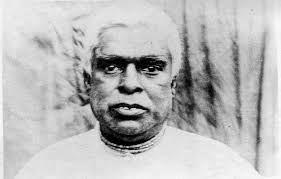
All glories to Śrī Śrī Guru-Gaurāṅga
By Sampradāya-saṁrakṣaka Śrī Śrīla Shyām Dās Bābā Mahārāja
Date 13.01.2026
Gauḍīya Goṣṭhī-pati Śrī Śrīla Bhakti Siddhānta Sarasvatī Gosvāmī Ṭhākura Prabhupāda said that —“Whenever I look at the lotus feet of Śrīla Saccidānanda Bhaktivinoda Ṭhākura, then I can see the complete beauty of the lotus feet of Śrīmatī Rādhārāṇī.”
This is the aprakṛta darśana of Śrīla Prabhupāda towards such a great Vaiṣṇava like Śrīla Saccidānanda Bhaktivinoda Ṭhākura. But our darśana is material darśana, I mean māyā darśana. When we look at any Guru-Vaiṣṇava, only we can develop blood and flesh conception and nothing else. This our material darśana which can throw us again and again into the ocean of doubt and suspicion. The Prabhupāda very often used to say that—“To test us whether we want guru-vaiṣṇava-Bhagavān or not, Māyādevī creating different kind of adverse situations all around us to create doubts and suspicion inside our mind.”
We never heard that Śrīla Prabhupāda considered Śrīla Saccidānanda Bhaktivinoda Ṭhākura as his father, and also Śrīla Saccidānanda Bhaktivinoda Ṭhākura never considered Bimala Prasāda to be his son. The conception of worldly relationship was completely absent in both of them. Pure guru-vaiṣṇavas are always beyond the limitations of material bondage, but still we always trying to place them on the same material platform on which we are standing. From the very beginning, Śrīla Saccidānanda Bhaktivinoda Ṭhākura could realize that Bimala Prasāda has come down on this earth planet for some most excellent and divine purposes. That is why he wrote in one of his kīrtanas—
“sarasvatī kṛṣṇapriyā ,
kṛṣṇabhakti tā’ra hiyā,
vinodera sei se vaibhava”
[Sarasvatī is the darling of Kṛṣṇa, devotion to Kṛṣṇa is her (his) heart, She (he) is the vaibhava of Vinoda.]
In spite of that – people like to continue to develop materialistic conceptions about guru-vaiṣṇava. Śrīla Saccidānanda Bhaktivinoda Ṭhākura himself wrote in his autobiography that he took birth in a śākta family (worshipers of Śakti). This, however, can create doubts and suspicions inside the hearts of worldly-minded people or so-called devotees about his eternal svarūpa. Bhagavān and His devotees are always ready to test us or even can deceive us, especially when we are kapaṭa (deceitful). Without being tested, Kṛṣṇa cannot accept us. Guru-Vaiṣṇava-Bhagavān always reserve the right of not being exposed to our material sense organs. Only through our humble submission unto the lotus feet of guru-vaiṣṇava-bhagavān, they can reveal their true svarūpa in front of us. From śāstra we can see that “Vaiṣṇavera cinite nāre devatā-śakti”, so really it is impossible even for those demigods to properly recognize a Vaiṣṇava. How then so it can be possible at all for a helpless and feeble jīvas —, those who are absorbingly busy with worldly affairs to understand pure guru-vaiṣṇava, or to pass any remark about them? So long as we are devoid of aprākṛta-sambandha-jñāna –I mean unable to discover our eternal relationship with Śrī Kṛṣṇa due to lack of vaiṣṇava kripa, till then we cannot come out successful to break our bondage to reach the lotus feet of the Supreme Lord.
Śrīla Prabhupāda often used to say that — “We Gauḍīyas — are actually śāktas.” He used to explain that Śrīmatī Rādhārāṇī is the internal potency (svarūpa-śakti) of Śrī Kṛṣṇa, and for this reason Gauḍīya Vaiṣṇavas consider Śrīmatī Rādhārāṇī to be the mūla-śakti-tattva. This is the reason for why the path of Gauḍīya bhajan is to serve Sri Kṛṣṇa through Srimati Rādhārāṇī, and it is for this reason that Śrīla Prabhupāda used to say that we are actual śāktas.
“syamac chavalam prapadye, śavalac chyamam prapadye” (Nārāyaṇa-valli)
“Through Śyāma (the dark Lord), I take refuge in Śavalā (the fair Goddess); through Śavalā, I take refuge in Śyāma.”
Guru-bhakti is the Backbone of Our Devotional Life
Guru-bhakti is the very backbone of our devotional life. Just as a snake without a backbone slithers about aimlessly and hides in a hole, so we also without genuine guru-bhakti may externally display so-called tṛṇād api bhāva but this way we can never come out successful in our bhajan life, then what to speak about any kapat Acharya who is devoid of Sad Guru kripa.
Śrīla Prabhupāda used to say that true humility does not mean to keep silent when guru-vaiṣṇavas are being insulted, rather to protest heavily with full confidence against all those offenders and antagonists those who are always ready to protect and preserve their very cheap lābha-pūjā-pratiṣṭhā is called bhakti. They are always ready to destroy the divine dignity of our Gauḍīya-sampradāya.
The Prabhupāda also used to say that—“We must fearlessly speak out the absolute truth without deceiving anyone. We will have to speak the absolute truth for the benefit of all, though it is apparently our unpleasant duty. This cannot be treated as giving anxiety to others. We have to search for the reality. We have to think about the maṅgala for all people in the world. With great determination, we have to do what is beneficial for ourselves and others. Unless we speak the truth boldly we cannot please Guru and Gaurāṅga. The more determined one is in devotional service, the bolder and more courageous he will be as a preacher. If I fail to speak the unalloyed truth because I might become unpopular, I have certainly abandoned the path of my disciplic succession and accepted an unauthorized path. In the end I will either find myself cheated or will become an atheist.” (from Upadeśāmṛta)
Who has the honest Courage to face the Absolute truth?
Who among those present-day ācāryas in our sampradāya truly having the courage or devotional power to protest against those dirty criticisms or offensive remarks by those antagonists? They have been circulating all those offensive remarks and writings openly to stop the flow of pure devotional field (I mean śuddha Bhaktivinoda Dhāra)? Who can tolerate the shameless audacity of those demoniac people who all are openly insulting our exalted Gauḍīya Guruvarga like Śrīla Saccidānanda Bhaktivinoda Ṭhākura or Jagad-Guru Śrīla Bhaktisiddhānta Sarasvatī Gosvami Ṭhākura Prabhupāda etc.?
Who can tolerate seeing poisonous chemicals are being poured into the pure — life-giving flow of Bhaktivinoda-dhārā? Today even those so-called “world-famous” ācāryas they themselves indulge in this kind of offensive practice through vaiṣṇava-aparādha, sampradāya-aparādha, or through the representation of the distorted version of vaiṣṇava-siddhānta vichar. Such offenses can never be excused. They are like poisonous snakes, destroying the devotional field as a whole. The most vital question at present in front of us is that — Who among us is ready to sacrifice his very life for the absolute cause of sampradāyika dignity— I mean the honour of the whole Gauḍīya sampradāya?
Absolute anugatya is the backbone of our devotional life, because Śrīla Saccidānanda Bhaktivinoda Ṭhākura has written that—‘śikhāya śaraṇāgati bhaktatera prāṇa’. To have a backbone means to have complete guru-niṣṭhā, sampradāya-niṣṭhā, or unwavering faith in vāṇī-vaibhava (which means absolute śaraṇāgati). Even the slightest weakness developed out of some injury inside backbone can lead up to total corruption and collapse. Our disbelief in Guru-Vaiṣṇava, or sampradāya can render the complete destruction of the function of the backbone, so that even we can become unable to protest boldly against any corruption indulged by anybody.
Why those pure guru-vaiṣṇavas are so powerful? This is because they have cent percent śaraṇāgati unto the Lotus feet of Śrīman Nityānanda Prabhu and Gaudiya guruvarga. By the power of Sad-guru one can do Hari-bhajana in true sense. If someone is sincere enough to take shelter of a powerful Sad-guru, then by the kṛpā of guru one can get strength in Hari-bhajana. The baby of a lion is also lion and surely not a cat. No guru-niṣṭhā, no sampradāya-niṣṭhā means that the man concerned is completely cut off from the source of all power—coming from Śrī Nityānanda-Balarāma. Maybe one can pass some lectures on the basis of his strong memory power—but we are less interested to hear any lecture from anybody? What we are waiting for is to hear the direct realizations of a sadhu who is the living source of guru-sevā. Speaking from books is very easy, anyone can do it, but to speak about the direct realization out of guru-vaiṣṇava seva – is not a matter of joke.
We can realise from the jīvan-līlā of Śrīla Prabhupāda, about what kind of massive divine power he revealed through his spotless acra – ācaraṇa, especially he was like a thunderbolt in front of those so-called sahajiyas who all wanted to snatch the aprakṛta body of paramahaṁsa-ācārya Śrīla Gaura Kiśora dāsa Bābājī Mahārāja to fulfil their personal dirty ends.
Then at that moment Śrīla Prabhupāda expressed his lion like mood to destroy their dirty plan and declared — “I am the only disciple of this paramahaṁsa Bābājī Mahārāja. Even though I have not accepted sannyāsa, I am a celibate brahmacārī, and by the grace of Bābājī Mahārāja I am not secretly addicted to abominable habits, nor am I involved in fornication like some monkey-like men. If there is anyone among those present who is a renunciate of stainless character, then he may take charge of Bābājī Mahārāja’s samādhi. We have no objection to that. Whoever here has remained without illicit connection with a woman—not only in the last year, or not in the last six months, or not in the last three months, or not in the last month, or not even last week, or not within the last three days, or not even the last night, he alone may touch this aprakṛta body. If anyone else dares to touch, then he will be completely ruined.”
By hearing Śrīla Prabhupāda speaking this way, someone may very easily think that he was extremely arrogant — “How can he declare, ‘I am the only disciple’?” But the truth is that if Prabhupāda did not have genuine tṛṇād api bhāva within his heart, he could never have spoken like this. For most of the people this is really confusing. They think tṛṇād api bhāva simply means to say, “Oh, daṇḍavat, prabhu,” as an external show of humility. But it is not like that. Actual tṛṇād api bhāva means to completely surrender one’s entire being at the lotus feet of śrī guru and the guruvarga—free from even the slightest smell of lābha–pūjā–pratiṣṭhā within the heart.
What is the difference between Bhaktivinod-dhārā and non-Bhaktivinod-dhārā?
Śrīla Prabhupāda used to say: “To understand the basic difference between Bhaktivinod-dhārā and non-Bhaktivinod-dhārā is itself called bhakti. Because by understanding this fundamental difference, one need not get his name registered in the list of those cheaters, then he need not learn something else in the name of bhakti.” Specially all those demons in the disguise of sādhu-guru-vaiṣṇava always try to misguide people away from the original track of Bhaktivinod-dhārā.
Śrīla Bhaktivinoda Ṭhākura is also known as the Bhagīratha of the śuddha-bhakti-maṇḍākinī-dhārā—the one who brought down the pure stream of devotion. The divine current that flodded (inundated) the whole world on behalf of Śrī Gaudiya Maṭh, still even today we can find the pure flow of that Bhaktivinoda-dhārā very secretly through pure guru-vaiṣṇava, but not openly, because of the demoniac activities of those antagonists in the guise of devotees or ācāryas. Just as Mother Gaṅgā has changed her course again and again over centuries and millennia, so similarly somehow the pure stream of Bhaktivinoda-dhārā always can maintain her flow through śuddha-guru-vaiṣṇava to distribute pure śabda-brahma through our Sarasvat Gauḍīya Guruvarga. Although at present I confess that it is almost impossible to clearly recognize that stream of Bhaktivinoda-dhārā because of too much miss-preaching, still we have the assurance of Śrīla Prabhupāda himself that the current of Bhaktivinoda-dhārā can never be stopped. That is why we can never become hopeless.
Pure Guru-Vaishnava can detect immediately — who is a cheater and who is not!
Śrīla Bhaktivinoda Ṭhākura and Bimalā Prasāda, both of them, one time went to Dakṣiṇeśvara (north Kolkata part) with great curiosity to visit a so-called sādhu who, by that time, earned the name as advaya-jñāna siddha puruṣa. So they went there to meet the sādhu who was enjoying honour and respect of public for his external strict vow of renunciation. This sādhu had a rigid rule: he would never touch money or any worldly possessions, considering them to be mere māyā (illusion). To arrest the fault of that so called sadhu red handed, to prove his very cheap philosophy to be useless, Srila Bhaktivinoda Ṭhākura himself purposely offered him some money for his services. As expected, the sādhu refused, declaring that as a true renunciat, he could not contaminate himself by touching such a material object like money etc.
Śrīla Bhaktivinoda Ṭhākura then asked him, “If you truly believe that all is Brahman and all is spiritual, why do you see a difference between your hand and a piece of money? If everything is Brahma, then whence can this kind of fearful mood of disparity develop? How can money contaminate you, whereas money is also Brahma like you, not that?” The so-called sadhu was speechless to give any answer to Śrīla Saccidānanda Bhaktivinod Ṭhākura. Then Śrīla Bhaktivinoda Ṭhākura offered him a stick and suggested him to pick up the money with the stick. The so-called sadhu readily took the money.
In this way with this simple test, Srila Bhaktivinoda Ṭhākura exposed the contradiction in the sādhu’s philosophy. The sādhu claimed to have advaita-jñāna-tattva, the philosophical principle of non-duality, but his actions proved something else.
Advaita-jñāna dictates that everything is non-different from Brahman. If the sādhu truly had this feeling, he would not have any distinction between his body and the money. His refusal to touch the money with his hand, but his mood to touch it with a stick, proved he was still remaining under the influence of the dualistic conception of this material world. Because he was still ready to be considered himself to be pure and stainless and the money to be impure.
This philosophical lesson made a profound impact on the young Bimalā Prasāda. It taught him the difference between phalgū-vairāgya (false renunciation, which superficially rejects this material world) and yukta-vairāgya (which is nothing but the true renunciation for the absolute satisfaction of the Supreme Lord). This principle became a milestone of siddhānta-vicāra in the life of Śrīla Bimalā Sarasvatī (Śrīla Bhaktisiddhānta Sarasvatī Ṭhākura).
On another occasion there was a grand assembly where many respected personalities of society gathered to speak on the Absolute Truth. Śrīla Kumud Śānta Mahārāja was appointed as the chairman of that assembly. In course of time when he went on inviting one speaker after another, then he was supposed to invite one so called professor who was present on the dais as an honourable guest to speak something on the subject matter already proposed by the assembly. This man began to deliver a long discourse on advaita-siddhi, declaring repeatedly that “everything is Brahman—sarvaṁ khalv idaṁ brahma.” After his allotted time was over, Śrīla Śānta Mahārāja took the opportunity to give a direct lesson to everyone to prove the professor is an idiot. So without speaking anything, suddenly he simply took his own daṇḍa and made a show to beat him with a stick. At once, the man recoiled in fear, shrinking back like a terrified dog. Śānta Mahārāja then remarked with cutting humour–“I thought you are Brahman, this stick is also Brahman, and I am also Brahman—so what wrong in it? Why are you afraid of the stick, whereas as per your proclamation you are also Brahman!” Immediately the entire assembly busted into laughter. In that moment everyone could perceive the folly of Māyāvāda reasoning. Such so-called philosophers may try to misguide the public, but when they can face a pure Vaiṣṇava like Śrīla Śānta Mahārāja—whom I proudly honour as my Guruvarga—their illusory doctrines collapse like a house of cards.
I can give one nice example by which you can understand what advaita-siddhi means. One very powerful yogī named Trailanga Swami (who was originally from Maharashtra) would sometimes sit unclothed in public, absorbed in samādhi. The public considered this improper and decided to call the police to give punish to him. Then when Trailanga Swami was put in jail in Vārāṇasī, the guards mocked him and wanted to test his holiness. Out of ridicule, they brought him a pot filled with human stool instead of food.
To their utter astonishment, Trailanga Swami ate it as if it were the most delicious meal. Witnesses reported that he ate without any sign of disgust. Even more amazingly, after eating, he showed no ill effect on his health. The onlookers were stunned and began to realize that Trailanga Swami was not an ordinary man. He had transcended the body’s dualities of purity and impurity.
Also, after a short time in jail, to everyone’s astonishment, he was seen walking freely on the streets of Benares as if nothing had happened. The guards rushed back to check and found the jail cell still locked from outside—yet empty. Convinced of his supernatural powers and flawless, the officials could do nothing. From then on, most people, including the authorities, regarded him with reverence rather than opposition.
Advaita-siddhi is not such a cheap thing that just by marking the forehead with tilaka one can be called a siddha mahātmā. It is the realized state of one who has truly transcended the bodily platform and rests beyond all dualities. In this connection, we can also remember the pastime of Nimai eating from the dirty pots, described in the Caitanya-bhāgavata, Ādi-khaṇḍa, Chapter 8–
When Nimai was a small boy, one day Mother Śacī suddenly found Him sitting on the ground and putting handfuls of dirt into His mouth. Shocked, she rushed to stop Him and scolded–“What are You doing, my child? Dirt is filthy and impure! You should not eat it. I will give You delicious sweets and rice, but don’t eat mud!” Little Nimai, however, looked at her with complete innocence and replied with the logic of a great wise personality–“Mother, what is the difference? Food (koi & sandesh) is also nothing but mud. Rice, sweets, and vegetables etc. all coming from the earth. When one eats cooked food, one is only eating transformed mud. So why do you forbid Me from eating it directly?” Śacī-devī was amazed at His clever words (tattva – siddhānta-vicāra). She then explained sweetly–“Yes, everything comes from the earth, but food grains are first offered to Kṛṣṇa, and by His mercy they become nourishing and pure. Eating raw dirt brings no benefit, but food offered to the Lord brings health and devotion.” Hearing this, Nimai smiled, as if satisfied with her reasoning, and stopped eating the dirt.
Srila Saccidananda Bhaktivinod Thakur under the Covering of Yogamāyā
Some persons—those who wanted to criticise Śrīla Saccidananda Bhaktivinoda Ṭhākura to bring some defame in his devotional life—spread some scandal in his name about his previous unusual activities as a śākta. But such arguments are baseless and offensive. Even if some external activities of some great eternal Bhagavat parshad like Śrīla Saccidananda Bhaktivinoda Ṭhākura are pointed out by those miscreants, they cannot even touch the eternal, spotless nature of a pure devotee like him, because they are always under the protection of Yogamāyā externally exhibiting something else which can create confusion among those demons or so called devotees.
We must understand this principle: Yogamāyā sometimes arranges circumstances in which great devotees appear to act in a worldly way, but this is only to bewilder the faithless and to test the sincere. The same Yogamāyā is also known as Durgā, Kālī, and various other forms—externally she may manifest frightening, bewildering, or tamasic appearances, but internally she is the eternal maidservant of Kṛṣṇa, arranging His līlā and protecting His devotees.
Also we can remember Śiva. He is the topmost Vaiṣṇava—vaiṣṇavānāṁ yathā śambhuḥ—yet outwardly he smears ashes, staying at cremation grounds, and externally he is staying with all those ghosts around him. This external behaviour is only a disguise; inwardly, he is fully absorbed in ananda glorifying the Supreme Lord.
Similarly, Kālī may appear surrounded by blood and skulls, but she is none other than Yogamāyā, whose only purpose is to protect the devotees and bewilder the non-devotees.
Therefore, even if there is some external appearance of non-devotional conduct in the lives of great personalities like Śrīla Bhaktivinoda Ṭhākura, it can never be judged by material eyes.
Śrīla Bhaktivinoda Ṭhākura is not a conditioned soul bound by karma. He is the Bhagīratha of the śuddha-bhakti-maṇḍākinī-dhārā, the one who brought down the pure current of Kṛṣṇa-bhakti in this age. To measure him by the yardstick of material behaviour is not only foolishness but—it is most offensive. Śrīla Bhaktivinoda Ṭhākura is the personified śākti of Śrī Gaura’s mercy–
śrī-gaura-karuṇā-śakti-vigrahāya namo ’stu te
gaura-vāṇī-pracāraṇe niratāya namo ’stu te
śuddha-bhakti-maṇḍākinī-srotaḥ-pravāha-pāvanāya
bhaktivinoda-sarasvatī-śrī-vardhanāya te namaḥ
“I offer my respectful obeisance’s unto Śrīla Saccidānanda Bhaktivinoda Ṭhākura, who is the personified energy of Śrī Gaura’s mercy, always engaged in preaching the message of Lord Gaurāṅga, who purifies the flowing current of the Ganges of pure devotion, and who is the beloved nourisher of the Sarasvata devotees.”
If Yogamāyā can cover even the actions of Kṛṣṇa Himself—who steals butter, who dances with the wives of others—then what difficulty is there for her to arrange that ordinary people may be confused about the early life of a devotee? But those pure guru-vaiṣṇava understand that — externally there may be a show of tamas or worldly life, yet internally, the current of devotion is untouched, pure, and ever-flowing.
Therefore, to repeat such dirty gossip about Śrīla Bhaktivinoda Ṭhākura is to be stuck from head to toe in Māyā’s illusion. The sincere devotee must instead take shelter of the current of Bhaktivinod-dhārā and receive the pure gift of śuddha-bhakti that he has mercifully brought into this world.
Gaura Hari Hari Bol