
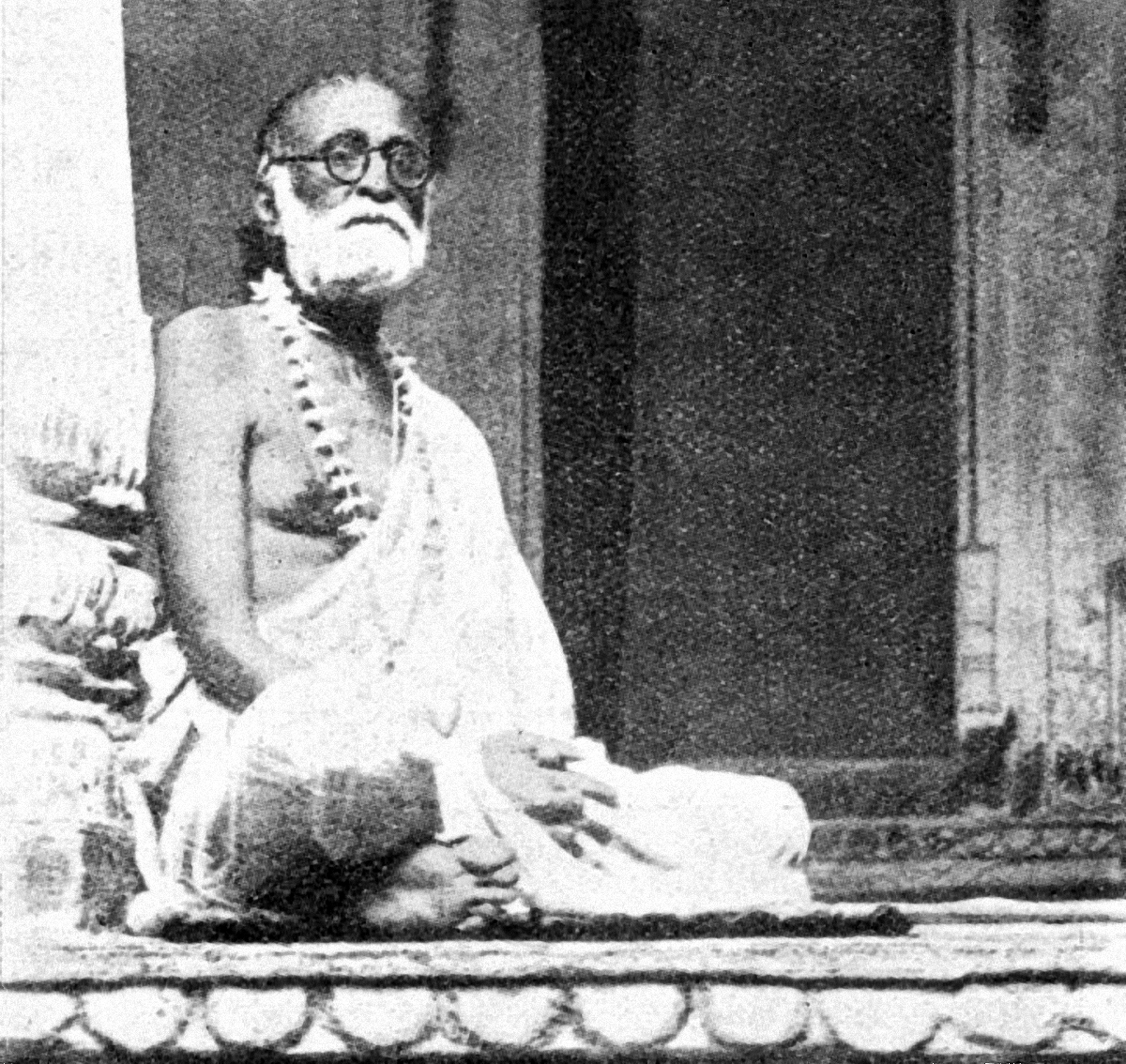
All glories to Śrī Śrī Guru-Gaurāṅga
By Śrī Śrīla Shyām Dās Bābā Mahārāja
Date – 01.09.2026
Gaudiya Goṣṭhī Pati Śrī Śrīla Bhakti Siddhānta Sarasvatī Gosvāmī Ṭhākura Prabhupāda Paramahaṁsa Guru said that: “Bhagavān is vibhu vastu, how can a tiny jīva get in contact with Ananta Deva?”
Out of His causeless mercy Bhagavān has arranged guruvaiṣṇava-śāstra-nāma etc. — all kind of festival like Janmāṣṭamī, Gaura Pūrṇimā etc. etc. Also for the upliftment of the conditioned souls, He has arranged the sacred observance of Cāturmāsya vrata. Just as He has given Ekādaśī to purify our senses, the Holy Name to awaken our dormant prīti for Him, Tulasī-devī to engage us in devotion, the holy dhāmas to purify our lives, and the association of pure Vaiṣṇavas to illuminate our devotional path, so He has also given us these four sacred months as a special opportunity to convert our dirty lifestyle.
Śrī Kṛṣṇa Caitanya Mahāprabhu, who has appeared to teach us the highest idealism of devotional service, has shown us by His absolutely illustrious personality about how to observe this most sacred Cāturmāsya vrata.
sadopāsyaḥ śrīmān dhṛta-manuja-kāyaiḥ praṇayitāṁ
vahadbhir gīr-vāṇair giriśa-parameṣṭhi-prabhṛtibhiḥ
sva-bhaktebhyaḥ śuddhāṁ nija-bhajana-mudrām upadiśan
sa caitanyaḥ kiṁ me punar api dṛśor yāsyati padam
(Prathama Caitanyastaka)
“Lord Caitanya Mahāprabhu is always the most worshipable Deity of the demigods, including Lord Śiva and Lord Brahmā, who came in the guise of an ordinary human being bearing absolute love for the Supreme Lord. He wanted to instruct His own pure devotional service to His own devotees. Aho! When will He again become an absolute object of my darśana?”
During His South India trip, He accepted the loving request of the great devotee Śrī Veṅkaṭa Bhaṭṭa to stay there in their house at Śrī Raṅgam Kṣetra to observe the vrata of Cāturmāsya. Externally, He was in the renounced order and was travelling continuously to distribute the Holy Name throughout Bhārata-varṣa, but especially at the time of Cāturmāsya, He remained in one place. Especially during those four months, Śrī Kṛṣṇa Caitanya Mahāprabhu used to become absorbed in Hari-kathā and Nāma-saṅkīrtana with His devotees. Because of the staying of Śrīman Mahāprabhu there, the house of Veṅkaṭa Bhaṭṭa was just like Vaikuṇṭha–jagad, filled with the current of divine love, and all the members of that house received the causeless mercy of Śrīman Mahāprabhu.
Also during His pastimes at Śrī Jagannātha Purī (Sri Nilachal Ksetra) it was the system set by Him to observe Cāturmāsya vrata flawlessly with full enthusiastic mood together with all of His devotees or followers. Every year, before the time of Lord Jagannātha’s Ratha-yātrā, a deep longing would arise within the hearts of the devotees of Navadvīpa-dhāma to meet with their heart, Śrī Kṛṣṇa Caitanya Mahāprabhu. It was the system established by Śrīman Mahāprabhu that these devotees would come from different parts of Bāṅglā, especially from Navadvīpa-dhāma, and stay there for the four months of Cāturmāsya–vrata.
Śrī Kṛṣṇadāsa Kavirāja Gosvāmī has writen:
tabe gauḍa-deśa haite bhakta-gaṇa saba viśeṣe navadvīpa haite āilā bahu jana
(Śrī Caitanya-caritāmṛta, Madhya-līlā 1.125)
“Then all the devotees from Gauḍa-deśa came, especially many from Navadvīpa.”
Led by Śrī Śivānanda Sena, the devotees travelled together in joyful saṅkīrtana. Advaita Ācārya, Śrīvāsa Paṇḍita, Murāri Gupta, Vāsudeva Datta, Rāghava Paṇḍita, Vakreśvara Paṇḍita, Haridāsa Ṭhākura, and many other intimate associates walked the long road to Purī. The journey was difficult, but love made every hardship insignificant. Every step brought them closer to the Lord of their hearts — Sri Gauranga Deva.
When the news reached Mahāprabhu that His beloved devotees had arrived, His own heart overflowed with great joy.
pāche prabhura nikaṭa āilā bhakta-gaṇa gauḍa haite bhakta āise — kaila nivedana
(Śrī Caitanya-caritāmṛta, Madhya-līlā 11.64)
“The devotees approached the Lord and informed Him, ‘The devotees from Gauḍa have already arrived.’”
Even before meeting them, Mahāprabhu sent flower garlands along with chandan and Lord Jagannātha’s mahā-prasāda to welcome them. Such was His unconditional affection that He could hardly wait to see them. Then came the long-awaited meeting. Vṛndāvana dāsa Ṭhākura describes in Śrī Caitanya-bhāgavata that when Mahāprabhu and His devotees finally saw one another, the pain of an entire year’s separation vanished in an instant. They embraced again and again. Tears streamed from their eyes, voices choked with emotion, and the Holy Name filled the air all around. Some laughed, some cried, some trembled, and others stood speechless, overwhelmed by prema.
Śrī Caitanya-caritāmṛta simply summarizes that sacred moment:
navadvīpa-vāsī ādi yata bhakta-gaṇa sabāre sammāna kari’ balilā vacana
(Śrī Caitanya-caritāmṛta, Madhya-līlā 3.188)
“The Lord lovingly welcomed all the devotees from Navadvīpa and the other places, honouring each of them.”
For the next four months, they lived together in Puruṣottama-dhāma. They danced before Lord Jagannātha during Ratha-yātrā, chanted the Holy Name, honoured mahā-prasāda, listened to Harikathā from Mahāprabhu, and in this way they worshipped every fraction of a second of their stay there, simply to obtain the absolutely holy association of the Supreme Lord, Śrī Kṛṣṇa Caitanya Mahāprabhu, who was their very life and soul.
The devotees of Navadvīpa surely did not travel all the way to Purī merely to attend the Ratha-yātrā festival. Rather, they willingly took the trouble to walk such a great distance, to Śrī Nīlācala Kṣetra, in order to meet their heart, Śrīman Mahāprabhu, without whom they felt just like a dead body. Their annual journey was not simply a pilgrimage — it was an absolutely loveful, emotional sevā, which became possible only by the power of Śrī Nāmasaṅkīrtana, and ultimately they would receive the great fortune of embracing the Golden Avatāra.
The Cāturmāsya period also has a practical reason. During the rainy season, most of the roads throughout India became flooded, rivers overflowed their banks, and travelling from village to village became very difficult. Those sādhus therefore took the decision to remain in one place until the rainy season was over. In this way, what appeared to be a natural calamity could actually give them a golden opportunity to become engaged more and more in Hari–kathā, kīrtana, and sādhu-saṅga.
Today, those muddy roads have almost disappeared, because modern civilisation has built highways where there were once narrow footpaths. Rivers are crossed by bridges, and long distances have become very easy to travel by train, vehicle, flight, etc. It is true that somehow we are now in a position to overcome all those different kinds of external obstacles, but in this modern world, Māyā-devī is creating more and more difficulties in the form of modern scientific development. From morning to night, our minds are constantly engaged with countless distractions, mainly through the invention of the internet, iPhone, social media systems, etc. One interruption follows another. One unnecessary curiosity leads to the next. Our attention becomes scattered over hundreds of insignificant subjects. The mind’s attention span has become almost nil. Our mind is like a monkey — so restless, jumping from one subject to another. In such a condition, if we try our best to sit in one āsana and chant Harināma on our japamālā, we can sometimes feel completely disappointed. That is why this Cāturmāsya–vrata is so important. By observing Cāturmāsyavrata, at least we can develop some divine qualities and prepare ourselves to attain eternal sevā in the eternal dhāma. During this time, one should voluntarily set boundaries around oneself, not allowing unnecessary things to enter and disturb one’s bhajana. In this way, during Cāturmāsya–vrata, Bhagavān invites us to engage our mind more and more in Hari–kathā, kīrtana, sādhu-saṅga, and devotional practices. This is the actual meaning and spirit of Cāturmāsya. We should always remember that a scattered mind can never become successful in spiritual life. Lord Kṛṣṇa says in the Bhagavad-gītā:
vyavasāyātmikā buddhir
ekeha kuru-nandana
bahu-śākhā hy anantāś ca
buddhayo ’vyavasāyinām
(Śrīmad Bhagavad-gītā 2.41)
“Those who are on the path of spiritual development must have a pakka resolution. Their aim must be one-pointed. But those who are guided by māyā and allow their attention to be scattered among countless objects of attraction and repulsion cannot concentrate their mind upon one particular object. O beloved descendant in the dynasty of Kurus, the intelligence of those who are irresolute are having many-branches.”
Modern society is almost afraid of making any sort of commitment, because no one can keep the commitment. There is a well-known proverb, “Those who commit themselves to nothing become distracted by everything.” These few words describe the tragedy of modern life. A person without a fixed spiritual determination becomes the servant of every passing attraction. Today one ambition captures the mind; tomorrow another takes its place. New interests arise, old enthusiasms disappear, and life quietly slips away while the real purpose of human birth remains unattended.
The observation of Cāturmāsya vrata is something more than following strictly the regulation regarding what to take and what not to take. It is the causeless kripa of Bhagavān that He is always thinking about us and how to regulate our reckless lifestyle. It is a sacred opportunity to say to the restless mind: “For these four months I shall listen more Harikatha than before. I shall chant with greater attention than before. I shall waste less time than before. I shall absorb the words of the ācāryas more carefully than before. I shall guard my speech, purify my thoughts and increase my service to Śrī Guru and the Vaiṣṇavas.”
Such strong resolutions are absolutely necessary for any devotional progress. A river changes its course not by one great wave, but by the steady flow of water. Similarly, the heart is transformed not by occasional enthusiasm, but by repeated and sincere effort in devotional activities. Cāturmāsya–vrata teaches us that genuine progress in bhakti is built upon regular and steady practice, performed under the guidance of Guru-Vaiṣṇavas and śāstra. So, the ultimate goal of observing Cāturmāsya–vrata is to develop unalloyed bhakti unto the lotus feet of the Supreme Lord, Bhagavān Śrī Kṛṣṇa, or Śrī Kṛṣṇa Caitanya Mahāprabhu. For this reason, all our previous ācāryas never wanted us to focus on hard austerities and penances simply as an exhibition. Every regulation in the way of bhakti-yoga should give nourishment to our constant remembrance of Bhagavān. The external vow may help us gain control over our restless senses and mind, but the continuous remembrance of Hari–Guru–Vaiṣṇava is the most vital point which we should search for in our life. When, however, only the external skeleton of the vrata remains and the internal purpose is lost, then the vrata can have no real meaning at all.
Gaura Hari Hari Bol